Get Full Government Meeting Transcripts, Videos, & Alerts Forever!
Get email alerts on the Special Education topic
No spam. Unsubscribe anytime.
Special education enrollment climbs; district outlines staffing, program and space plans
Summary
Dr. Wilson reported roughly 211 more special-education students than the previous year, a classification rate cited at about 18.2% (district enrollment about 11,600), an 83% graduation rate for special-education students, and proposed responses including a third self-contained kindergarten classroom, shifting some classrooms to a 15:13 staffing model, adding four school psychologists and expanding integrated co-teaching settings pending space from a capital project.
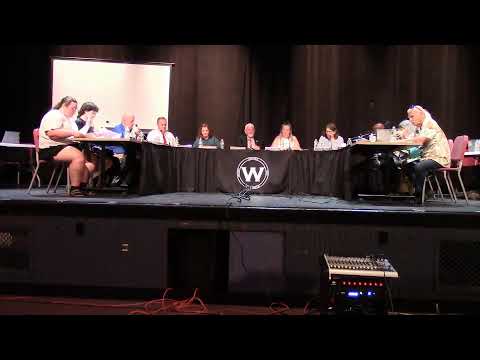
The Wappingers Central School District heard a detailed special education annual report June 8 that described a sharp post-pandemic rise in identified special-education students, current program distribution, and proposed near-term staffing and program responses.
Dr. Wilson told the board the district’s enrollment from the state data is about 11,600 students and cited a special-education classification rate of roughly 18.2%, with “about 211 more special ed students” this year than last. He said staffing in the special-education department includes 187 teachers, 245 teaching assistants, 25 speech teachers, 21 social workers, 13 occupational therapists and four physical therapists. The presentation noted the preschool special-education caseload (CPSC) totals 643 students and that the district’s share is a substantial concentration within the county.
On outcomes and accountability measures, Dr. Wilson cited an 83% graduation rate for students classified for special education and a 5.7% dropout rate for that population, both presented as district outcomes that compare favorably to state targets. He flagged areas where the district did not meet state targets for placements in separate settings (citing a district rate of 6.6% vs. a state target of 4.8%) and said that a capital project to create more in-district program space should reduce out-of-district placements over time.
To respond to rising need, Dr. Wilson outlined operational proposals: open a third self-contained kindergarten classroom to absorb overflow students; formally change some self-contained kindergarten classes to a 15:13 staffing model (15 students, one teacher, three teaching assistants) so classrooms start the year with that team structure; expand integrated co-teaching (IC) settings in secondary schools; and add four school psychologist positions to replace services lost with the end of a previous grant (referred to in the discussion as the “recups” grant). He said those changes would both keep more students in-district and could save money compared with tuition and transportation costs for out-of-district placements.
Board members asked clarifying questions about whether a 15:13 model is considered more restrictive under state reporting; Dr. Wilson replied that a smaller ratio is technically more restrictive but that state reporting also counts one-to-one aides and other staffing in its calculations. Board members and Dr. Wilson repeatedly said space constraints are a primary obstacle to bringing more programs in-house and that the planned capital project would be a key enabler.
One board member later stated the special-education graduation rate at 85% during discussion; when asked, Dr. Wilson said he did not have the year‑over‑year change figure immediately available. The transcript records a range of numbers during the discussion; the report slides and final minutes should be consulted for exact, audited figures.
Dr. Wilson summarized new and continuing in-district programs (language-based self-contained classrooms at elementary schools added this year) and stressed that continued monitoring of disproportionality and least‑restrictive placement metrics will be important going forward. The board extended time for additional discussion and thanked Dr. Wilson and special-education staff for their work.