Get Full Government Meeting Transcripts, Videos, & Alerts Forever!
Get email alerts on the Education Policy topic
No spam. Unsubscribe anytime.
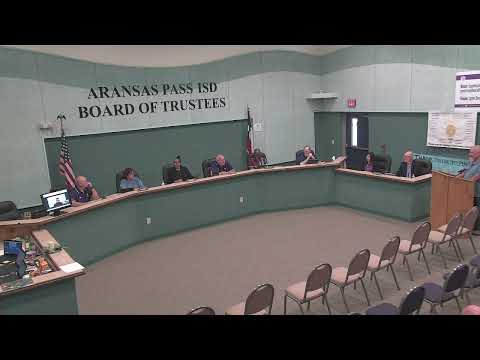
Aransas Pass ISD board tables decision on allowing homeschooled students in UIL activities
Summary
Trustees delayed a decision on whether to allow homeschooled students to participate in UIL extracurricular activities under new state law, citing unclear guidance on eligibility verification, fairness and funding. The board voted to table the item and requested draft administrative rules and sample contracts before acting.
Aransas Pass ISD trustees tabled a decision on whether to permit homeschooled students to join University Interscholastic League (UIL) extracurricular activities, citing concern over administrative verification, fairness and possible fiscal impacts.
Superintendent Mr. Bennett told the board that Senate Bill 401 requires districts to allow homeschooled students to participate in UIL activities unless the local board votes to opt out, and that "If you take no action, that means you're allowing homeschool students to participate." He said the district would need administrative regulations to define eligibility, recordkeeping and ongoing verification if the board opts to allow participation.
Trustees and staff raised operational and legal questions. Board members and administrators noted there is limited state guidance about how to verify continuing eligibility after initial enrollment. Mr. Bennett said, "Academic eligibility verification would pretty much rely on what the parents provided," and that some homeschool programs are accredited while others are not. Trustees asked whether third-party tests or accredited program documentation could be required, and whether the district can legally require recurring evidence without exceeding its jurisdiction over nonpublic instruction.
Coach Davis, the district's athletic director, described competing priorities: the possibility that opening participation could reconnect some students to district programs, versus concerns about fairness and attendance rules for students who are enrolled full time. He emphasized that if homeschooled students were permitted, the district would still expect them to meet participation and practice requirements and that "we will not treat those kids any different" if they join programs.
Board members also discussed fiscal and enrollment implications. Administrators said some districts reported additional state funding tied to participation but cautioned that increased participation could also produce enrollment and attendance shifts that affect state funding. Trustees noted that over 700 Texas districts have opted out so far and that the policy environment remains unsettled.
After extended discussion requesting sample contracts and administrative regulations from comparable districts, Mr. Stanbury moved to table the item until the board's next meeting; Trustee Angel seconded and the motion carried. The board asked administration to research examples of eligibility contracts, vet proposed language with legal counsel and present a draft for future consideration.
Next steps: the item will return for further consideration at an upcoming board meeting or special session once administrative recommendations and sample contracts have been prepared.