Get Full Government Meeting Transcripts, Videos, & Alerts Forever!
Get email alerts on the Public Health topic
No spam. Unsubscribe anytime.
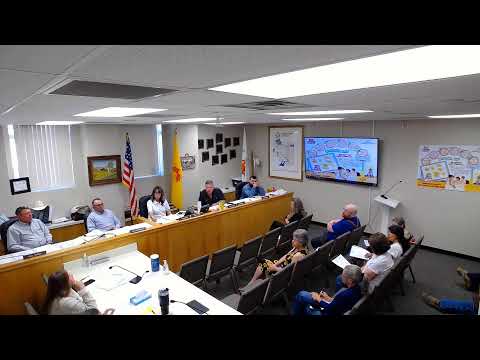
Regional public-health official outlines children’s services, WIC and mobile unit in Roosevelt County meeting
Summary
Jimmy Masters, regional director for the southeast public-health region, described clinic networks (57 clinics; over 500 clients/year), WIC and harm-reduction services, rollout of a mobile public-health unit and Narcan distribution and training available across the region.
Jimmy Masters, regional director for public health in the southeast region, gave a 30-minute overview of public-health services to the Roosevelt County Commission on Tuesday, describing programs for children, maternal nutrition, infectious disease surveillance and overdose prevention.
"My name is Jimmy Masters. I'm the regional director for public health in the southeast region," Masters said when introducing the presentation. He told commissioners he is based in Roswell and oversees operations for 10 public-health offices in eight counties.
Masters said the Children’s Medical Services program operates 57 clinics across the region and serves "over 500 clients" annually, offering specialty clinics (asthma, epilepsy and others) and transportation or lodging support when patients must travel to tertiary centers. He said the program partners with Carrie Tingley Hospital and the University of New Mexico to bring specialty care to the region.
Masters also summarized the Women, Infants and Children nutrition program (WIC), the breast and cervical early detection program (coordinated through the state cancer bureau), and vital-records services (birth and death certificates; state residency required and a $10 fee for birth certificates, he said).
On infectious disease and harm reduction, Masters described the department’s role in hepatitis prevention, HIV care and sexually transmitted infection screening and partner services. He stressed overdose prevention efforts and confirmed that Narcan (naloxone) is available free through public-health offices and will be supplied and offered on the department’s new mobile public-health unit. "We offer Narcan training and dispensing," he said, noting public-health partners and law enforcement collaborate on distribution.
Asked by commissioners which medication the department uses most for opioid use disorder, Masters said the health offices currently dispense Suboxone and that methadone is used elsewhere for some patients; he added counseling remains important and is provided by partner agencies. He said the department is supporting medication-assisted treatment where feasible but typically refers counseling and longer-term treatment to partner clinics.
Masters introduced a new mobile public-health unit that will provide vaccinations, harm-reduction education, limited clinical services and vital-records services in remote communities. He said the vehicle is smaller and more nimble than the department’s previous RV-based unit and will be deployed across county seats and communities to expand local access.
The presentation closed with contact information and a pledge to follow up with commissioners on outreach and clinic scheduling; Masters also said printed informational folders would be left for commissioners and staff.
The county meeting did not take any formal action on public-health programming; Masters’ presentation served as an informational briefing and a prompt for commissioners to ask follow-up questions about local access and partner referrals.