Get Full Government Meeting Transcripts, Videos, & Alerts Forever!
Get email alerts on the Student Device Policy topic
No spam. Unsubscribe anytime.
District outlines phone-free rules under California's incoming law
Summary
District staff explained new state rules (Assembly Bill 3216 / Ed. Code 48901.7) requiring limits on student smartphone use; Martinez Unified will enforce bell-to-bell storage for most grades, lay out progressive consequences, and keep explicit exceptions for emergencies and IEP needs.
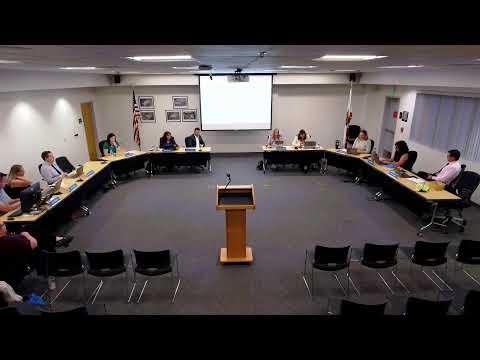
The Martinez Unified School District board heard a presentation June 8 on how the district will implement Assembly Bill 3216 (California Education Code 48901.7), the so-called phone-free schools law that takes effect July 1, 2026.
Patty Ali summarized the law and the districts implementing board policy 5131.8. "Assembly Bill 3216 that's going into action on July 1st 2026 ... what they call a phone-free schools act," she said, noting the code "mandates that all schools ... limit or prohibit . . . student smartphone use on campus." District-level rules will require elementary and Martinez Junior High students to keep devices powered off and securely stowed bell-to-bell in backpacks. High school students at Alhambra High School and at Vicente (continuation sites) may use phones during noninstructional time (passing periods and lunch) but must keep devices off and stored in classroom pouches or phone boxes.
Ali described progressive consequences: an initial confiscation for the remainder of the day, parent notification on a repeat offense, and increasing disciplinary measures for further violations (detention, Friday school, or longer-term holding of devices). Wearable devices such as smartwatches and wireless earbuds follow the same storage rules.
She also outlined exceptions in the statute and district policy: students can use a phone in an emergency, with teacher or administrator permission for instructional purposes, when a licensed physician documents medical necessity (for example, for a diabetic student), or when such use is specified in a students individualized education program (IEP).
Trustees asked practical questions about how parents will reach students during the school day. Ali said parents should contact the school office, where staff will relay messages; board members asked that communication procedures be clarified before the school year begins so families know how to reach students in urgent situations.
The district will re-send communications to families and publish the policy language and guidance for parents before the July 1 effective date.