Get Full Government Meeting Transcripts, Videos, & Alerts Forever!
Get email alerts on the Surveillance Privacy topic
No spam. Unsubscribe anytime.
Rangely resident urges council to review Flock license-plate readers, cites privacy risks
Summary
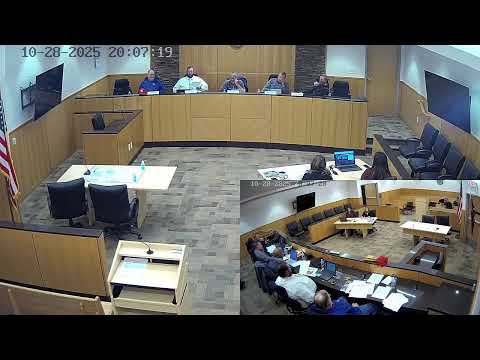
At the Oct. 28 Rangely Town Council meeting, resident Mark Stamus urged the council to reconsider its contract with Flock Safety license-plate readers, arguing the cloud-based system creates searchable vehicle “fingerprints” and raises Fourth Amendment and mass-surveillance concerns; councilors asked for evidence and more public input.
Mark Stamus, a Rangely resident speaking during public comment, told the Town Council the Flock Safety license-plate reader cameras were installed without adequate public input and argued the system creates a searchable cloud database that can ‘‘fingerprint’’ vehicles and potentially profile residents. "These cameras are not owned by the town," Stamus said, adding that the vendor ‘‘stores a vehicle fingerprint in a searchable database located in the cloud, even if the vehicle or its driver is not suspected of any crime.”
Council members responded with a mix of caution and skepticism. Council member Todd Thane said he had read Stamus’s materials but wanted documentary proof linking Flock to improper data sharing; "Show me the evidence," Thane said. Council member Tim Weber and others defended the cameras’ immediate public-safety value, citing the chief of police’s comments that the system has helped locate stolen license plates and a missing person.
Don Davidson thanked Stamus for raising the issue and called for continued engagement to address concerns about data use and potential legal exposure. Lisa, speaking as town manager during later updates, noted the town had procured the cameras to assist local public safety and pointed to agreements and grant procedures that guided procurement.
The exchange touched on technical and civil-liberty questions Stamus raised: whether plate-image data can be aggregated across systems and combined with doorbell or other camera feeds, whether third-party access or future facial-recognition use is possible, and whether using vendor-hosted cloud storage constitutes an impermissible warrantless search in some circumstances. Stamus urged the council to consider a resolution to end the contract or hold public hearings; several councilors encouraged him to present documentary evidence and to mobilize residents if he wants formal policy change.
Council members also discussed practical constraints: several said the cameras were discussed in prior public meetings and budget sessions and that citizens have opportunities to attend work sessions; others warned that pursuing litigation or contract termination could create costs for the town. No formal motion or vote to change the current contract was made during the meeting.
What happens next: council members asked the resident to follow up with documentary evidence and suggested town staff and the police chief be engaged for a technical briefing if the community requests one. The council did not schedule a special hearing on the matter at the Oct. 28 meeting.