Get Full Government Meeting Transcripts, Videos, & Alerts Forever!
Get email alerts on the Environment topic
No spam. Unsubscribe anytime.
Residents push for local control as council approves Patterson shoreline restoration agreements
Summary
Council approved two agreements to restore shoreline at Patterson Park with U.S. Fish & Wildlife and a regional CWMA, but residents and beautification commissioners warned the project was rushed and pressed for clearer roles, termination terms and assurances that private‑park status would be preserved.
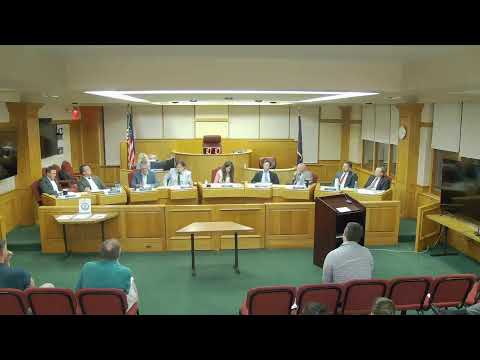
Grosse Pointe Park — The City Council voted June 8 to approve two agreements to restore invasive species and plant native habitat along the Patterson Park shoreline after extended public comment and a legal review by the city attorney.
What was approved: Council approved (1) a landowner agreement presented by the U.S. Fish and Wildlife Service through the Partners for Fish and Wildlife program and (2) participation with the Detroit River Western Lake Erie Cooperative Weed Management Area (CWMA). Staff described the restoration work as site preparation, invasive species management and seeding with native grasses and wildflowers intended to improve habitat for pollinators and birds.
Scope and term: Staff said the proposed agreement covers roughly 0.3 acres of wetland shoreline at Patterson Park and would include a 10‑year habitat retention period; the draft agreement was described as running through May 2036. Under the draft terms, the city would retain ownership and control of the property, while U.S. Fish and Wildlife would be granted access (with the city’s permission) for implementation and monitoring. Either party could terminate the agreement with 30 days’ notice; city staff said a prorated reimbursement of partner costs would be required if the city terminated prematurely.
Resident concerns: Several members of the Beautification Commission, including Pat Beck and Ann Blue, told the council they were not given full information or adequate time to deliberate before the commission voted on its recommendation. Pat Beck said the project was brought to the commission during a picnic meeting and members were “rushed into voting.” Commissioners and residents warned about: loss of local control if long‑term federal or regional MOUs are accepted without strong local oversight; volunteer capacity to sustain multi‑year maintenance; and how the city would handle permit requirements or overlapping capital projects (for example, future kayak‑launch work that might intersect the restoration area).
Legal review and staff response: City Attorney Zach advised council that, under his reading, accepting federal technical assistance and grant funds for habitat restoration would not legally force the city to open private parks to the general public and that the federal government could not compel a change in private‑park status via this kind of habitat‑restoration agreement. He further advised council that the charter provided mechanisms for council to authorize designated access for the purposes of the contract and to make park rules that promote public health and welfare. City Manager Seisland and parks staff said the U.S. Fish and Wildlife Service would provide technical assistance and monitoring while the city would remain responsible for ongoing maintenance and volunteer coordination; staff noted they would return with further implementation details and that if the city failed to sustain commitments it might owe a prorated reimbursement.
A numeric note from staff: During the discussion staff referenced a projected total figure using the phrase “projecting a total of $960” in the meeting transcript; that figure as stated in the record appears ambiguous in isolation and staff should be asked to confirm whether a digit or multiplier was omitted in the oral presentation or packet.
Council action: After hearing the city attorney’s review and discussion with commissioners and residents, council voted to approve both agreements. Supporters on the council and among commissioners argued the technical expertise and potential grant funding could help remediate long‑standing invasive plant issues on the shoreline, while opponents urged clearer limits and assurances that the city would retain final authority over land use decisions.
What happens next: Staff said they will submit the required documentation to CWMA for grant consideration and will work with the Patterson Park Garden Club and Beautification Commission on volunteer coordination, project supplies and maintenance scheduling. If the city accepts grant funding and later discontinues the project, staff said the city may be responsible for reimbursing a prorated share of partner costs under the draft contract terms.
Quote: “This is a private park and I’m very concerned that we’re potentially giving away local control if we involve these agencies,” Pat Beck told council during the meeting. City Attorney Zach replied: “There’s absolutely no legal support for this concern…that would be an illegal taking,” meaning a federal partner could not lawfully use a grant to force a change in ownership or public access.
Staff follow‑up requested by council: a clarified, written statement of anticipated partner costs and any city‑level financial commitments; a maintenance and volunteer‑support plan; and a narrower scope or map (if council wishes) to avoid overlap with any future capital improvements such as a kayak‑launch reconfiguration.