Get Full Government Meeting Transcripts, Videos, & Alerts Forever!
Get email alerts on the Parks And Recreation topic
No spam. Unsubscribe anytime.
Council adopts city’s first five‑year parks plan, flags $750K annual maintenance shortfall
Summary
Grosse Pointe Park approved a five‑year parks and recreation plan after months of public engagement; the plan prioritizes pool repairs, a historic playscape renovation and smaller amenity projects but leaves a multi‑year funding gap for maintenance and major items such as the boardwalk.
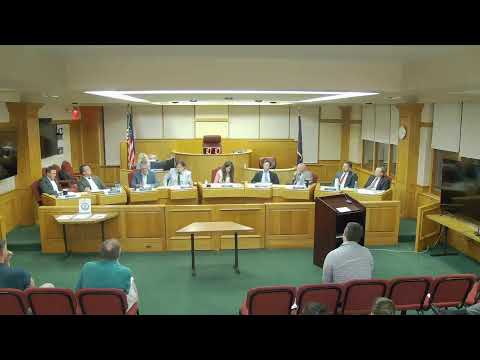
Grosse Pointe Park — The City Council on June 8 formally adopted the city’s first five‑year parks and recreation plan, approving a prioritized capital list and a framework for phasing work over multiple years.
The plan, developed in consultation with OM and city staff, cataloged park assets, surveyed residents (roughly 1,000 responses) and held a participatory budgeting exercise that helped set priorities. Consultants presented a prioritized five‑year capital list that totals roughly $3 million for projects the community ranked highest, with a more extensive list of about $6 million if larger options such as full boardwalk replacement are pursued.
“What we found through this…is a wide range of projects that need to happen here,” OM consultant Eric Drier told council, acknowledging items ranging from modest $3,000 maintenance fixes to high‑ticket projects like a full boardwalk replacement estimated at roughly $2 million. Consultants recommended grouping work where possible to capture construction efficiencies, for example doing pool mechanical and deck work together.
Key priorities and numbers
- Pool mechanicals and deck/plaster: identified as a high‑priority project to avoid potential seasonal shutdowns; consultants said the pool may have only a couple of years before major intervention is required.
- Patterson Park playscape: community favored a major renovation over smaller fixes, recognizing the structure’s historic value and higher replacement cost.
- Boardwalk: assessed to be serviceable with maintenance for perhaps another decade but a full replacement was estimated around $2 million.
- Total prioritized five‑year capital (staff/consultant estimate): about $3 million; expanded options list: about $6 million.
- Ongoing maintenance shortfall: consultants and staff said the parks maintenance baseline is about $150,000 per year; adding the capital cadence of roughly $600,000 per year suggests an effective annual gap of about $750,000 if the full capital program is to be addressed without delay.
What the plan changes: The plan establishes a multi‑year, prioritized approach so the city can balance smaller amenity projects (pickleball courts, dog park, kayak launch) that keep community momentum with larger, higher‑cost projects such as pool mechanicals and the boardwalk. Consultants emphasized that community input favored both low‑cost amenities and protecting key large assets.
How the city will pay: Council members asked staff for funding scenarios. Mr. Craig (parks director) said the next step will be to match project phasing to funding sources — including bonds, grants and annual capital appropriations — and to return to council with recommended funding strategies once final designs and cost estimates are complete.
Council reaction and next steps: Council members praised the community engagement and urged staff to return with an implementation and funding schedule. The plan passed on a roll call vote. Staff will prepare annual updates and present funding options for identified large projects (boardwalk and pool) after additional design and bidding work.
Who said what: “The parks here are one of the gems of the community,” Council member Lucy (remarks at meeting) said during discussion. Consultant Eric Drier summarized technical findings about asset conditions and proposed phasing; OM’s participatory budgeting exercise was cited by park leaders as crucial to prioritizing projects.
Why this matters: The plan gives the city an organized road map for investing in visible community assets and for avoiding abrupt service interruptions (for example, the pool or ice rink becoming nonfunctional). It also forces a budget question: whether to accelerate funding to avoid a backlog or to spread work and funding across years.
Staff follow‑up: Parks staff will return with a capital funding plan, grant application strategies and an annual maintenance schedule to reduce the risk of future backlogs.