Get Full Government Meeting Transcripts, Videos, & Alerts Forever!
Get email alerts on the Ai Guidance topic
No spam. Unsubscribe anytime.
Franklin Public Schools publishes draft AI guidance path after broad surveys and student input
Summary
After a district review and surveys of families (457 responses), staff (146) and students (27 in focus groups), Franklin Public Schools' Office of Teaching and Learning outlined four guiding principles for classroom AI use and said it will publish draft guidance this fall and expand student voice on its advisory committee.
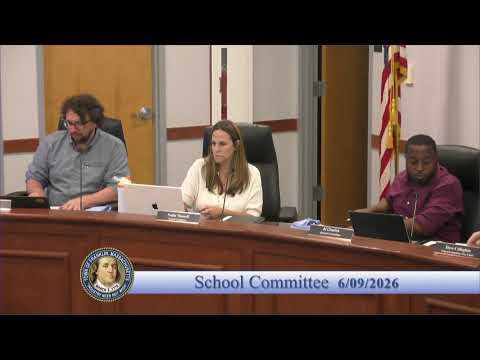
Franklin Public Schools officials on Tuesday described a multi-month effort to craft district guidance for classroom use of artificial intelligence tools and outlined next steps for the coming school year.
Dr. Tina Rogers, assistant superintendent for teaching and learning, said the district's AI committee gathered stakeholder input through surveys and focus groups: 457 family responses, 146 staff responses and 27 students across three focus groups. "We heard families and teachers want guidance and they want student voice," she told the committee. She said 88 percent of families support teaching AI responsibly, and 87 percent of families reported their students are already using AI tools.
The committee proposed four guiding principles: maintain human connection (AI should enhance, not replace, teacher-student relationships); build AI literacy appropriate to grade levels; require personal accountability for how tools are used and reported by students; and protect data privacy and security (a non-negotiable that personally identifiable information not be entered into open AI platforms).
Eric Stark, director of STEM, said the group tuned its position on accountability after stakeholder feedback. The draft guidance shifts from a rigid requirement to "cite AI use" at submission toward an expectation that students explain how AI informed their process and the steps they took to verify the output.
Students who participated in focus groups told the committee they generally want boundaries rather than bans: they described using AI for study guides, formatting help and proofreading but expressed concern about skill erosion and overreliance. Parents and teachers voiced concerns about accuracy, academic dishonesty and reducing students' opportunities for peer collaboration.
What's next: the Office of Teaching & Learning plans to reorganize the district AI committee this summer, add student representation to the committee, publish a draft guidance document online in early fall, and embed AI professional learning across the school year. Officials also said they will reach back to parents who volunteered expertise during the survey process and involve community advisers.
Why it matters: school leaders said clear local guidance can reduce confusion about permitted uses, help teachers plan instruction that leverages AI ethically, and educate families on responsible use and data risks. "Humans remain the teachers, the learners, and the evaluators," Eric Stark summarized during the presentation.