Get Full Government Meeting Transcripts, Videos, & Alerts Forever!
Get email alerts on the Science Curriculum topic
No spam. Unsubscribe anytime.
Sycamore board approves new K–12 science course of study after hands-on classroom demonstration
Summary
After a hands-on demonstration of an inquiry-based lesson, the Sycamore Community City school board approved a new K–12 science course of study designed to build scientific literacy and require at least one community-connected science experience per student each year.
The Sycamore Community City school board approved a new K–12 science course of study following a classroom-style demonstration and discussion of the curriculum’s goals.
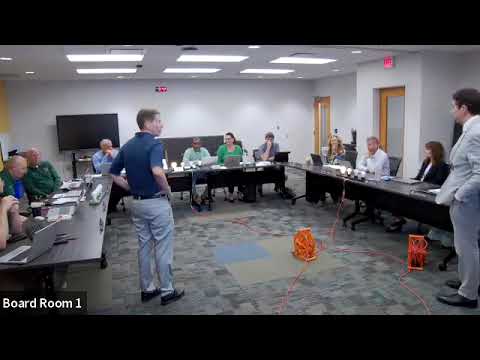
Presenters from the district and Hamilton County Educational Service Center framed the curriculum around three-dimensional learning — disciplinary core ideas, science and engineering practices, and crosscutting concepts — and emphasized inquiry anchored to phenomena. "We built curriculum guides for each grade level so every professional learning community can enact the vision," said Chris Anderson, who identified himself as working for Hamilton County Educational Service Center. During a live demonstration, a Sycamore teacher known as Mike invited board members to diagnose a rewired light fixture as a way to model how students observe phenomena, form questions and construct explanations.
The curriculum team told the board the course is intended to make science instruction accessible to all grades and ability levels by scaffolding inquiry tasks. Rebecca, a curriculum team presenter, said the planning group included more than 40 educators from all seven school buildings and that teachers developed unit design templates, scope and sequence documents, and candidate instructional materials. The team also recommended that "every student in Sycamore has at least one community-connected learning experience a year," a requirement the presenters said would connect inquiry to local contexts.
Board members asked about the start of formal science instruction, elementary time constraints, and how the district will make advanced pathways (AP physics, electives) available alongside early exposure. Staff responded that science begins in kindergarten, often embedded in literacy for younger students, and that the course of study gives elementary teachers explicit permission and structure to carve out dedicated science time.
A motion to approve the new science course of study was made and seconded; the presiding officer called the roll and members present indicated assent. The board then moved on to other agenda items.
The approval establishes the district’s curricular expectations and launches implementation work: staff said they will continue aligning instructional materials and supporting teachers through professional learning and unit design work in the months ahead.