Get Full Government Meeting Transcripts, Videos, & Alerts Forever!
Get email alerts on the Special Education topic
No spam. Unsubscribe anytime.
Special education directors tell board inclusion gains helped reverse some declines, but graduation rates vary by cohort
Summary
Dr. Lynn Dows and Janet Rushton presented the district’s special education profile to the board, explaining compliance indicators under IDEA, recent inclusion efforts, and why cohort composition produced wide swings in special‑education graduation rates (91% in 2021 vs. 50% in 2024). No formal action was taken.
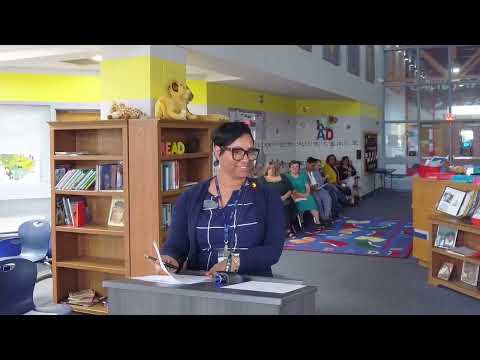
Dr. Lynn Dows, the district’s special education director, and special education coordinator Janet Rushton presented the district’s annual special education profile and determination to the board during the May meeting.
Dows framed the presentation around federal and state accountability requirements under the Individuals with Disabilities Education Act (IDEA), explaining that the district’s report card includes both compliance measures (for example, the 60‑day evaluation timeline) and performance indicators such as graduation rates, ELA and math proficiency, and suspension/expulsion metrics. “I hope you brought your popcorn and your sleeping bag because I can talk all night long about special ed,” Dows told board members, underscoring the program’s complexity and the number of indicators the state reviews.
The presenters said the district is emphasizing inclusion and early intervention. Rushton described efforts to increase least‑restrictive‑environment placement for preschoolers and to move more students with disabilities into general education classrooms with support. Dows said that strategy—embedding special education teachers and assistants in regular classrooms—has contributed to rising proficiency and greater access to grade‑level instruction.
The presentation included comparative figures the presenters used to show cohort effects on graduation rates: Dows noted that a cohort’s composition (for example, a larger share of students in self‑contained placements who are not seeking a diploma) can depress the reported graduation rate. She cited a contrast between an example cohort that produced a 91% graduation rate in 2021 and a later cohort that showed roughly a 50% rate in 2024, and said the district has focused on preparing students earlier so more can earn diplomas.
On compliance, staff emphasized the district’s need to meet time‑sensitive requirements—most notably the 60‑day evaluation timeline for special‑education eligibility—and outlined routine monitoring steps. Rushton also discussed alternative assessments used for students with significant cognitive disabilities and the district’s secondary‑transition planning to support employment, military service, or postsecondary education after graduation.
Dows summarized a broader funding concern the field faces, saying that IDEA funding has historically fallen short of the law’s authorizing levels and that local and state funds must fill the gap. Board members asked for additional demographic breakdowns and the share of total enrollment represented by special education; presenters said they would provide the requested breakdowns and noted the district’s current special‑education enrollment percentage in the presentation materials.
No board action was required on the presentation; members thanked the presenters and the district staff for their work and said they would review the additional data when provided.