Get Full Government Meeting Transcripts, Videos, & Alerts Forever!
Get email alerts on the Infrastructure Hydropower topic
No spam. Unsubscribe anytime.
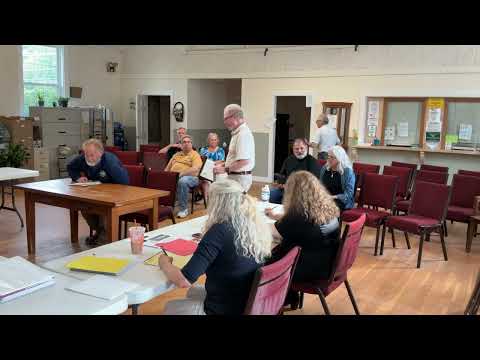
Barnstead Select Board accepts watershed plan as resident urges small‑hydro pilot at local dam
Summary
The select board voted to accept a watershed management plan while hearing a resident present a proposal to pursue a pilot study to qualify small hydropower at a local dam, saying federal rules currently favor very large dams and leave low‑head sites constrained.
At its meeting, the Barnstead Select Board voted to accept a watershed management plan and heard a resident urge the town to pursue a pilot study to clear regulatory hurdles for small hydropower at a local dam.
Ed (presenter) told the board he met with federal and state officials and concluded “the federal regulations are holding up small micros,” saying current federal rules are written around dams with heads of 150–200 feet and do not accommodate lower‑head sites like the lake under discussion. He proposed using the Suncook/Sunook Lake site as a pilot to test a regulatory path for smaller hydro projects. Ed said the site’s head is roughly 20 feet and that outflow restrictions would likely limit generation to about 2 megawatts despite higher theoretical potential.
Board members and staff discussed engineering options for the damaged culvert and dam face. Ed described a repair approach that would preserve existing rockwork by inserting a metal liner or culvert through the damaged section, rather than complete removal, and noted engineers had visited the site to evaluate that approach. He said historical‑society review and state regulators raised concerns about approaches that would alter historical fabric (the transcript records debate over a "double cover" solution the state dislikes).
Separately, town staff described the RFQ process the steering committee will use to rank proposals from contractors working with the Department of Environmental Services (DES). The board reviewed the selection approach and then voted to accept the watershed management plan; a motion was seconded and approved by voice vote.
Practical constraints flagged during discussion included the one‑year timeline for regulatory work that Ed mentioned, uncertainty about DES staff responsiveness, and potentially large costs to remove or rehabilitate many historic small dams statewide (participants referenced "200 plus" sites and multi‑million‑dollar liabilities in general terms). The town also noted the upcoming drawdown of the lake could help reveal site conditions for bidders.
The board scheduled a joint workshop with the Pittsfield Select Board for June 10 to discuss regional coordination and posted that meeting as open to the public. The board did not adopt any binding commitment to proceed with a pilot beyond accepting the watershed plan and asking staff/presenters to assemble more detailed information for future consideration.