Get Full Government Meeting Transcripts, Videos, & Alerts Forever!
Get email alerts on the Public Health Water topic
No spam. Unsubscribe anytime.
Board approves design funding for two PFAS removal facilities at town wells
Summary
East Lyme’s Board of Finance unanimously authorized design-phase funding for two PFAS removal facilities — $378,000 for a plant adjacent to well 4A and $372,000 for a combined plant serving wells 1A and 6 — to produce construction estimates and prepare for stricter regulation.
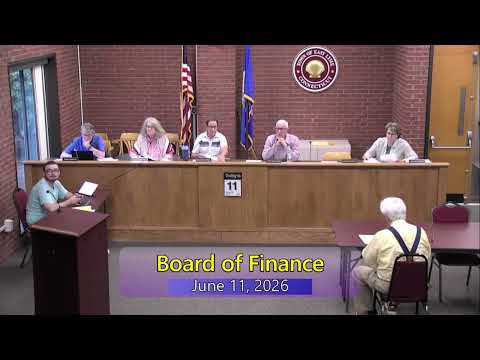
The East Lyme Board of Finance on June 11 authorized design funding for two PFAS removal facilities at town wells, voting unanimously on motions that finance staff said will pay for engineering and design work so the town can seek construction funding later.
Finance staff described these votes as design-phase appropriations. Dan Cunningham, identified in the meeting as the town’s Water and Sewer Commissioner, explained the technical rationale: affected wells will be fitted with activated-carbon filtration systems to remove per- and polyfluoroalkyl substances (PFAS). He told the board that staff have throttled two affected wells so that when blended with the rest of the system the water is below current regulatory standards, but the town wants to be “ahead of the curve” for anticipated tighter limits.
The board approved a resolution to appropriate $378,000 for the design of a PFAS removal facility adjacent to the East Lyme well 4A water treatment plant; the motion carried 5-0. A second motion to appropriate $372,000 to design a PFAS removal facility to serve two piped wells (1A and 6) also passed 5-0. Staff said the connection between the two wells allows the town to build one treatment plant to serve both sites rather than two separate plants, increasing efficiency and avoiding the need for a third facility.
Dan Cunningham summarized the town’s approach to water safety succinctly: “So we’re getting ahead of it,” reflecting the town’s intent to design facilities now to meet future regulatory expectations. The meeting record notes that litigation related to PFAS was mentioned but not discussed in detail at this session.
Board members moved that the town authorize design appropriations now and revisit construction-phase funding in future budget cycles; staff said the design work will provide the cost estimates needed for subsequent appropriation requests.