Get Full Government Meeting Transcripts, Videos, & Alerts Forever!
Get email alerts on the Upk Placement topic
No spam. Unsubscribe anytime.
Parent urges review of UPK placements after lottery; district says lottery was required
Summary
At a Shoreham‑Wading River board meeting, a parent asked the board to re‑examine the district'9s universal prekindergarten placement process, saying multiple lotteries and location reassignments disrupted families; the superintendent replied the state requires a lottery and invited parents to seek clarification from his office.
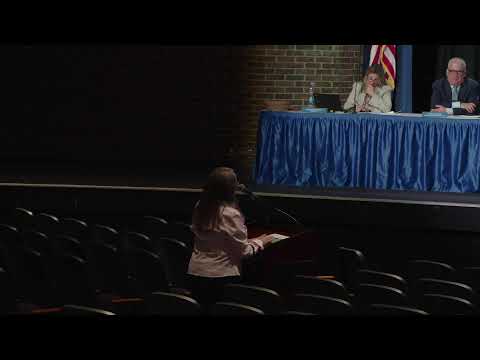
A parent asked the Shoreham‑Wading River Central School District board on June 10 to review how the district assigned seats for the new universal prekindergarten (UPK) program, saying the placement process caused avoidable disruption for families.
"Families entered the process believing they were registering their child for UPK consideration. What followed was a confusing series of events that included not one but two separate lotteries," parent Christy Alada said during the meeting'9s public comment period, adding that some families were reassigned away from child‑care providers where their children already attended. She urged the board to prioritize continuity of care when participating UPK providers have capacity to keep enrolled children.
Superintendent Mr. P replied that the district'9s hands are constrained by state UPK rules this year. "The lottery process is not optional for a New York State UPK program for this year," he told the board, describing the district'9s approach: families ranked preferred locations and a single random drawing determined which families received seats; if a first‑choice location was full, the district assigned families to their second or third choice as needed.
The superintendent provided several operational details: district staff reported 64 students registered for the EVK portion of programming against 72 seats overall; county‑area providers listed included Kitty Academy (18 seats), St. Ansoms (36 seats), and St. David'9s (10 seats) as locations used in the placement process. The superintendent also noted the district has 112 registered incoming kindergarten students (10 in small‑group settings and 102 in general education).
Alada said the practical effects on families included added transportation burdens, broken sibling placement plans and new childcare scheduling costs. She asked the board to ‘‘re‑examine these assignments before the start of the school year’’ and to prioritize keeping children with providers where they were already enrolled when capacity exists.
Mr. P invited parents with concerns to contact his office for a walkthrough of the placement and lottery process and said staff have been responding to individual inquiries. Board members asked whether the state regulation covers both "seat" and "location" language; Mr. P said he would review the regulation language and encouraged parents to seek direct clarification from the district while noting the district cannot retroactively reassign seats without creating fairness claims for families already offered seats.
No formal board action to change placements was recorded at the meeting. The superintendent said the district would continue to field parent questions and clarify the lottery process; parents continue to press for a review of placements where continuity could be preserved.