Get Full Government Meeting Transcripts, Videos, & Alerts Forever!
Get email alerts on the Zoning Adus topic
No spam. Unsubscribe anytime.
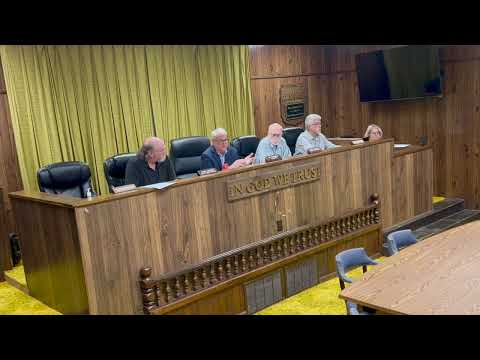
Olive board adopts zoning change to allow accessory dwelling units of 400–1,000 sq ft
Summary
The Olive Town Board on June 3 adopted Local Law No. 1 of 2026 to amend Zoning Chapter 155, allowing accessory dwelling units (ADUs) with usable floor area between 400 and 1,000 square feet and clarifying tiny-house and ADU rules; the board signed a negative declaration and said the change aims to expand affordable housing options.
The Town of Olive Board voted June 3 to adopt Local Law No. 1 of 2026, amending Zoning Chapter 155 to clarify and expand rules for accessory dwelling units (ADUs).
Supervisor said the amendment fills a gap in the code that had left a range of unit sizes unclear and would allow ADUs with usable floor areas between 400 and 1,000 square feet, while explicitly allowing tiny houses of 400 square feet or less under the International Residential Code Appendix Q. "The intent of this provision is to expand affordable housing opportunities in the town of Olive to expedite the process," the supervisor said.
Before the vote the board authorized the supervisor to sign a negative declaration under state environmental review, indicating the board found no significant environmental impact that would require a full environmental impact statement. The board then moved and approved the local law; the measure amends sections including 155.14 and 155.17 to set minimum and maximum usable floor areas and to clarify that ADUs will generally be treated as-of-right (site-plan approval by the planning board not required except in limited cases).
The law also includes operational details: usable floor area excludes open porches, breezeways, garages, basements and unfinished attic space; ADUs are capped at two bedrooms unless the board approves a larger unit based on building characteristics that would not adversely affect public health and safety. The supervisor said the change was meant to make the code less ambiguous for applicants and to create a clearer pathway for modest secondary units.
Board members said they received at least one public comment during the hearing about wording but declined to overhaul the entire zoning chapter; instead, the board amended the specific floor-area language. The law becomes effective upon the filing required with the New York State Department of State.
Background: the discussion referenced the 2020 International Residential Code (Appendix Q) for tiny-house definitions and emphasized that the town will retain other code protections and planning-board referral authority for structurally or site-sensitive proposals.