Get Full Government Meeting Transcripts, Videos, & Alerts Forever!
Get email alerts on the Public Safety Budget topic
No spam. Unsubscribe anytime.
Hope Mills residents and officers urge town leaders not to cut public safety; many back modest tax increase
Summary
At a special public hearing on the proposed $22.5 million budget, officers, firefighters and residents urged the Hope Mills Town Board to avoid staff cuts and to consider a small property-tax increase to fund police, fire and other town services.
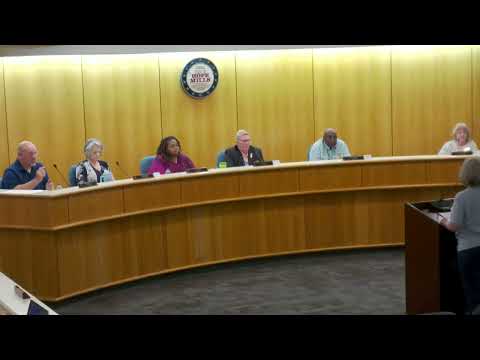
Hope Mills — Residents, police officers, firefighters and town staff pressed the Hope Mills Town Board on Wednesday to protect public-safety staffing in the town’s proposed $22.5 million budget, arguing cuts would reduce response capacity as the town grows.
The public hearing drew more than 20 speakers who urged the board to keep vacant positions open and to consider a modest property-tax increase to maintain police and fire services. The mayor had told the audience the budget ‘comes in at no property tax increase and that rate holds at 48’ as presented at the prior 5:30 meeting.
“Please consider hard all the decisions you make when it comes to public safety,” Deborah Jones, a Hope Mills resident and local business owner, told the board. She described a ride-along that convinced her the department needs additional officers and equipment.
“Hope Mills is growing faster than the resources that are tasked to protect it,” Mike Wheeler, a special-operations officer with the Hope Mills Police Department, said. Wheeler, a retired Marine First Sergeant, called for more officers, vehicles, technology and competitive salaries to retain and recruit personnel.
Several sworn officers gave first-hand accounts of staffing strains. Detective Chappelle said officers routinely spend hours at the county jail after arrests because processing there is slow, tying officers up for large portions of their shifts. Officer Peoples described household finances and said she and her husband both work for the town while struggling to cover childcare and housing costs; she contrasted local pay with higher offers from neighboring agencies.
“Officers need to see that there is a future in Hope Mills,” Detective Chappelle said, urging the board to back funding to retain experienced staff and improve technology.
Speakers from other departments echoed those concerns. Matthew Kane, Hope Mills’ fire chief, said every department — including streets, public works and sanitation — needs personnel and funding. He cited an example the board has heard before: a six-cent tax increase on a $500,000 property would cost roughly $25 a month, a figure he said he supports to maintain services and replace aging equipment.
Several residents and staff suggested the board consider a mix of revenue increases and targeted cuts. Mark Hess and Gerald Page said they would support a tax increase if it funds needed capital and service levels; Lean Carluchi, the town’s HR director, urged the board not to eliminate positions and to address prior budgeting decisions that left the town with shortfalls.
Some speakers also raised policy cautions. One commenter urged careful use of surveillance technology and said constitutional protections must be respected; Karen Smith Sar reviewed past investigations into departmental problems and said the current leadership shows ‘marked improvement’ but reminded the board of prior costs tied to lost services.
Town Police Chief Steve Dallinger thanked staff for speaking publicly and said a revenue increase may be the realistic path to avoid damaging cuts. A written message from Officer Jay Cooper, read into the record, urged the board to evaluate compensation and develop a staffing plan that matches growth.
The public hearing closed after the board moved and seconded a motion to end the comment period; the mayor said there were no opposed votes. The board recessed the special hearing and planned to return to the earlier recessed meeting for additional presentations and continued budget work.
What’s next: The board will consider the budget in subsequent meetings; at least one regular meeting with public-comment opportunities was scheduled one week later, according to the mayor’s announcement.