Get Full Government Meeting Transcripts, Videos, & Alerts Forever!
Get email alerts on the Urban Agriculture topic
No spam. Unsubscribe anytime.
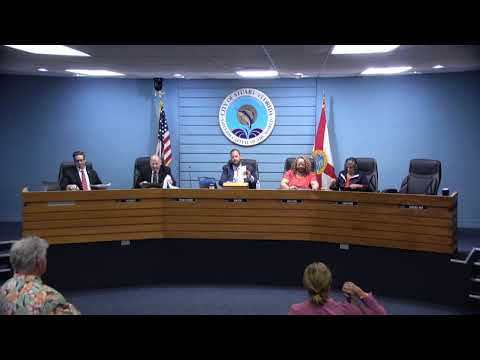
Stuart commission advances backyard-chicken ordinance to second reading amid water-quality concerns
Summary
The Stuart City Commission voted 4–1 on June 8 to move an ordinance allowing a limited number of backyard chickens in specified residential zones to a second reading, after commissioners and residents raised questions about wastewater runoff, setbacks from waterways and enforcement details.
The Stuart City Commission voted 4–1 on June 8 to advance Ordinance 2552-2026, which would allow up to four backyard chickens on many single-family and duplex lots, to a second reading after a lengthy public discussion about water-quality protections and implementation details.
The ordinance, introduced by development staff, would amend the land-development code and the city’s animal code to permit chickens as an accessory use in R1A, R1, R2 and designated urban-neighborhood districts in the city. Jody Cougler, development department staff, said the item responds to growing interest in small-scale, local food production and summarized prior review by advisory boards, which recommended design adjustments and a fee structure including a $65 initial registration and a $10 annual renewal.
Why it matters: Commissioners focused on two competing objectives — enabling property owners to produce eggs and food locally while protecting Stuart’s waterways. Commissioner Rich warned the commission must “hold ourselves to the highest standards” under the city’s comprehensive plan and cited University of Florida IFAS guidance noting that poultry waste can contribute nutrients to impaired water bodies. He argued the ordinance needs additional environmental analysis, setbacks from creeks and stronger waste-management requirements before it moves forward.
Supporters, including Samantha Smith, said the measure balances property rights and public health and presented an estimate that a one-time $65 registration could produce significant initial revenue depending on participation. Smith said the proposal contains mechanisms for recourse and education for new permittees.
Staff response and next steps: Cougler and other staff outlined options for addressing runoff and nuisance risks, including educational requirements, composting and commercially available waste-containment systems. Staff offered to return with GIS mapping showing parcels eligible under the proposed zoning filter, draft setback language, and a pilot-program option that would sunset automatically if the commission chose to test the rules before full adoption. Mayor Shawn Reed and other commissioners also asked the city’s environmental attorney to review nutrient/runoff language and provide guidance tied to the city’s basin-management obligations.
Vote and procedural status: Commissioner Gio moved and Commissioner Clark seconded the motion to move the ordinance to second reading; roll call was 4–1 with Commissioner Rich voting no. The city clerk confirmed the motion passed and the item will return for a formal second reading at a future meeting, where the commission expects staff to provide the requested environmental and operational details.
Outlook: Commissioners suggested possible adjustments before final adoption — higher coop heights, clarified setback distances from waterways, an optional pilot program, and expanded public notice. The second reading will determine whether the ordinance is adopted, amended or continued for further study.