Get Full Government Meeting Transcripts, Videos, & Alerts Forever!
Get email alerts on the Surveillance Lpr topic
No spam. Unsubscribe anytime.
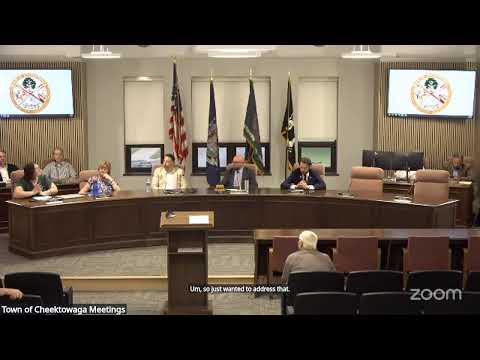
Cheektowaga board hears Flock Safety presentation, declines to take up contract amendment
Summary
After a 90‑minute presentation and extended Q&A with Flock Safety and the police chief, the Cheektowaga Town Board did not take action on the proposed contract amendment to add two license‑plate‑reader cameras; residents and council members expressed strong disagreement over privacy, security and oversight.
Trevor Chandler, senior director for public affairs at Flock Safety, and Carl Bach, Flock's government‑affairs manager, presented the company's license‑plate‑reader (LPR) technology to the Cheektowaga Town Board on June 9, saying the cameras are a “precision policing” tool designed to help investigators narrow searches and solve crimes quickly. Chandler told the board that data collected by the cameras is retained 30 days by default, that the company uses AWS GovCloud for storage, and that Flock maintains permanent audit logs to show who searched what and when.
The presentation was followed by a lengthy, detailed question‑and‑answer session in which council members pressed Flock and Cheektowaga Police Chief Coons on data sharing, retention, third‑party access, past contract terminations elsewhere, and cybersecurity. Chief Coons described local successes using LPR data, saying the system had helped locate vehicles in missing‑person and violent‑crime investigations and that it “saves us time. Period.” Flock emphasized audit tools, opt‑in sharing controls and SOC 2‑style certifications while declining to accept that their product amounted to mass surveillance.
Residents who spoke during the public comment period urged caution or removal of the cameras. Rachel Martinez, who has repeatedly researched the town's contract, said the town’s agreements and public records showed broad data flows and weak oversight, arguing that "the complete lack of oversight of Flock is concerning." Sandy Pislack cited national watchdog data and said dozens of municipalities have ended contracts with the company.
The board considered whether to take up or move forward with Resolution 2026‑342, the proposed amendment to the town’s agreement to add two cameras funded by a GIVE (gun‑involved violence elimination) grant. On a roll call related to moving that resolution forward, the board did not reach consensus; members split on the motion and the item was not taken up that night. Supervisor Brian Noak said he wants more time to review information and talk with colleagues, describing the issue as one where elected officials must weigh constituent concerns about privacy against public‑safety arguments.
What it means: The board left the substantive decision unsettled rather than approving an expansion. Supporters argue the cameras improve clearance rates for hit‑and‑runs, stolen vehicles and other crimes; opponents cite cybersecurity vulnerabilities, contract language that can allow broad vendor uses of data, and national examples of misuse. The board will weigh policy changes, oversight mechanisms, and possible contract amendments before any vote.
The board did approve other agenda items that evening — including the appointment of Detective Jacob Widowski and standard budget and capital items — but the Flock proposal remains pending while the town considers additional oversight, policy clarity and technical questions raised at the meeting.