Get Full Government Meeting Transcripts, Videos, & Alerts Forever!
Get email alerts on the Historic Preservation topic
No spam. Unsubscribe anytime.
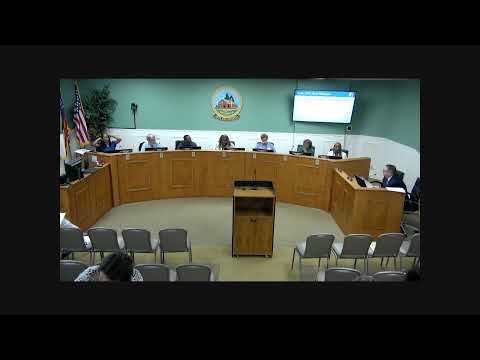
Council rejects proposal to buy 16 Rosenwald Drive for cultural arts museum
Summary
Council Member White Williams proposed the city purchase 16 Rosenwald Drive to establish a Rosenwald cultural arts and history museum; after debate over size, parking, funding and alternatives, the council voted to deny the purchase resolution.
Council Member White Williams presented a proposal at the June 9 meeting asking the city to buy 16 Rosenwald Drive and convert the house into a Rosenwald cultural arts and history center honoring the Rosenwald school legacy. She said the site sits across from the historic Rosenwald school and could anchor a revitalization strategy for the Rosenwald district.
The council and public debated the idea for more than an hour. Supporters said a local, on-site museum and interactive kiosks would preserve community history and provide programming for children; critics argued the house is too small, lacks parking and that the URRA (urban redevelopment authority) had already declined funding. Several residents and preservation advocates suggested alternative, lower‑cost approaches — for instance, trail‑side interpretation, outdoor memorials or phased investments that would start smaller and scale up.
Council members questioned funding sources and long-term operating costs. One council member noted that converting the house would require a budget amendment and additional capital to equip the exhibit and learning spaces; staff confirmed the city currently held modest dedicated funds (including a $19,000 Georgia Power contribution) but no full appropriation.
After deliberation the council voted to deny resolution 2026-45 to purchase 16 Rosenwald Drive. Several council members and members of the public said they remain committed to honoring Rosenwald history and recommended exploring grant-funded, phased or trail-based installations as an alternative to buying and renovating the house.
Next steps: staff will work with Main Street and the Historic Preservation Commission on lower-cost and grant-funded options to mark and interpret Rosenwald history, and to identify grant and private-match opportunities to build a longer-term cultural project.