Get Full Government Meeting Transcripts, Videos, & Alerts Forever!
Get email alerts on the Land Use topic
No spam. Unsubscribe anytime.
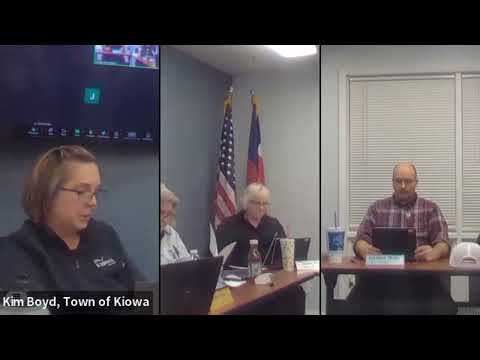
Trustees approve special‑use permit for 228 Comanche despite public objections alleging property disputes
Summary
The Kiowa Board of Trustees approved a special‑use permit for 228 Comanche Street to operate as a bar after hearing applicants’ plans and objections from a nearby business owner who alleged the applicants had not vacated another property and were involved in litigation.
The Kiowa Board of Trustees voted to approve a special‑use permit allowing a bar to operate at 228 Comanche Street after a public hearing and discussion of planning criteria.
Applicant Corey Bazquez told the board he and a partner have run a local coffee and bar business for five years and plan to invest in remodeling the new location, combining a coffee shop and bar intended to serve food and attract visitors. A manager who described herself as the manager of Ka Bar and the Elizabeth Kitchen and Bar urged trustees to approve the permit, saying the applicants had improved standards and supported town events.
During public comment, Tabitha King urged trustees to postpone or veto the application, alleging that applicants Teddy (Ted) Finley and Corey Bazquez failed to vacate a building she legally leased at 222 Comanche Street, withheld rent and otherwise obstructed her ability to open a separate business. King said the dispute had spawned litigation and alleged forgery and asked the town to ensure outstanding civil issues and debts were resolved before approving a new establishment nearby.
Property owner Joseph (Joey) — who said he owns the building where Finley and Bazquez currently operate — told the board he had served a notice to vacate and argued that Colorado law requires a legal right to premises for a liquor license; he urged trustees to verify licensing eligibility before any liquor‑license decision.
Town staff reminded the board that the matter before them was the land‑use question of whether the building at 228 meets the town’s special‑use criteria, and that the liquor license and civil disputes are separate processes handled by state licensing authorities and courts. The board was directed to rely on the SafeBuilt planning analysis included in the meeting packet when applying the special‑use criteria.
After brief discussion about whether ownership or a closed sale was required to consider the permit, a trustee moved and a second was recorded. The motion to approve the special‑use permit carried and the board announced approval. The motion addressed only the use of the building as a bar; any liquor license or business license would be considered through separate procedures.
The board did not adjudicate the civil claims raised by King during the hearing; staff reiterated that allegations of nonpayment, eviction or forgery are matters for civil courts and municipal code compliance, not a basis for denying a land‑use application unless the application specifically fails the code criteria.