Get Full Government Meeting Transcripts, Videos, & Alerts Forever!
Get email alerts on the State Budget topic
No spam. Unsubscribe anytime.
Senate passes omnibus budget after wide-ranging amendments on colleges, scholarships and an industrial grant
Summary
The Wyoming Senate passed its omnibus budget (Senate File 1) Feb. 20 after lengthy debate and dozens of third‑reading amendments that restored community college funding, set contingency funding for an education savings account and approved a $16 million grant linked to a rare-earth processing project.
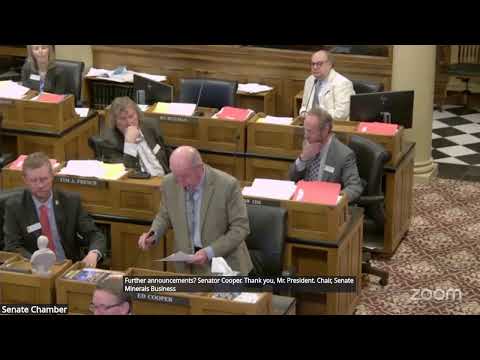
The Wyoming Senate on Feb. 20 passed its biennial omnibus budget, Senate File 1, after a daylong series of amendment votes that altered college funding, scholarship contingency plans and added targeted investments for economic development.
The bill ultimately passed on third reading after the Senate adopted multiple amendments proposed from the floor. Senator Driscoll, a floor sponsor, framed one of the early changes as a restoration of the Joint Appropriations Committee’s priorities, saying the amendment “restores the JAC addition of 5.45 million general fund and 5.45 million of federal funds for additional provider rate increases for the DD program.” The amendment passed with broad support.
Community colleges were a recurring focus: the Senate approved an amendment to fund an expert study of community-college funding ($350,000) and a series of targeted increases for dual-enrollment and career and technical education (CTE) programs. Senator Brennan argued the $350,000 “would bring in an expert to do a deep dive into what Wyoming looks like,” while colleagues said the funding could save money long-term by improving system efficiencies. Several amendments adding community-college dollars passed in different forms during the day.
On education policy, the Senate approved a contingency measure aimed at the new Education Savings Account program. Lawmakers approved an amendment authorizing a rainy‑day fund transfer of up to $30 million under narrow conditions if a federal court stay is lifted and funds are spent in the current school year. Sponsor Senator Boner said the language was designed to “allow for up to $30 million out of the rainy day fund but only under certain conditions,” citing the legal uncertainty that has surrounded the program.
A high-profile floor amendment converted a previously proposed loan to a grant to support a rare-earth processing project near Upton. Senator Love said the $16 million would help a project that could create hundreds of jobs and produce minerals critical to national security, arguing Wyoming should “lead the charge to shatter China’s stranglehold on rare earth elements.” Some senators raised constitutional concerns about direct grants to private entities under Article 16, Section 6 of the state constitution; supporters said the project includes matching private funds and national-security benefits. The amendment passed.
Other items added or clarified during floor debate included funding for farm‑to‑school programs, modest increases for senior care, appropriations to support community‑college CTE equipment, and targeted wildfire and trail projects. Several smaller proposals failed on roll call.
The Senate voted to pass Senate File 1 after the amendment process concluded; the bill will move to the House for consideration of any differences and, ultimately, to the governor. The votes and amendments leave several items contingent on other bills or subject to final appropriations language expected in conference work.
What’s next: conference and reconciliation. The Senate’s action sets the chamber’s priorities; final spending will be resolved in conference with the House and in follow-up appropriation activity. Where amendments rely on federal approvals, judicial outcomes, or matching funds, committee staff said implementation will depend on those external developments.