Get Full Government Meeting Transcripts, Videos, & Alerts Forever!
Get email alerts on the Fraud Administrative Dissolution topic
No spam. Unsubscribe anytime.
Wyoming Secretary of State urges broader dissolution powers and software upgrades to fight business‑filing fraud
Summary
The Secretary of State outlined recent use of administrative dissolution to strip fraudulent entities, urged the Legislature to expand statutory authority (including Representative Lucas's draft House Bill 125) and asked lawmakers to fund software upgrades and audits of commercial registered agents to reduce fraud at filing.
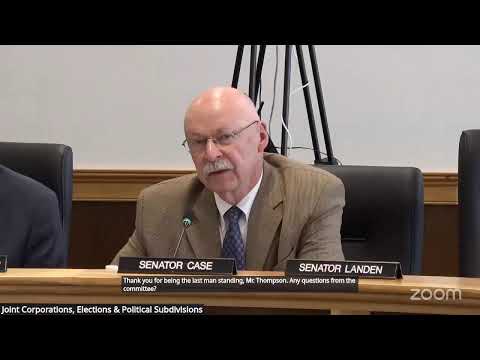
The Wyoming Secretary of State told a joint interim committee that his office has used existing statutes to administratively dissolve dozens of business entities that filed false or fraudulent documents and has stepped up audits of commercial registered agents.
The office recounted launching a business‑fraud reporting portal and processing more than 90 administrative dissolutions since the outreach began, and said targeted audits of registered agents identified compliance gaps. “From the day I was sworn into office…we have weaponized this statute to dissolve many fraudulent profit corporations and limited liability companies,” the presenter said, noting a subset of entities were dissolved after federal‑state investigations linked filings to foreign adversaries.
But the presenter told the committee current law limits administrative dissolution to entities that filed a fraudulent document with the Secretary of State or that are owned or controlled by foreign adversaries. The office supports Representative Lucas’s House Bill 125, which would allow forced dissolutions following criminal or civil findings of fraud on others, and discussed a broader “public‑interest” authority that would vest additional discretion in the chartering office.
Technical and administrative fixes were highlighted as complements to statutory change. Office staff and outside witnesses described a legacy business‑filing system that cannot use pattern recognition, IP and payment analytics, or credit‑bureau matching to flag risky filings. One witness noted Nevada’s recent modernization (Orion system) at roughly $10–13 million; presenters proposed smaller, staged upgrades for Wyoming and suggested funding through a budget request or a legislative bill.
Committee members asked about due process and political abuse risks if a broad public‑interest power is granted. The office responded that entities could challenge administrative dissolutions in court and that statutory sideboards could be drafted. Members also sought clarity on how dissolutions affect victims’ civil remedies; legal staff explained an administrative dissolution does not terminate liability and may be considered by courts in veil‑piercing and collection efforts.
The committee voted to have staff prepare Representative Lucas’s forced‑dissolution bill for the next meeting and to consider a budget or bill to fund software upgrades and additional enforcement capacity.
The next step is legislative drafting and possible formation of a working group to reconcile technical, privacy and due‑process concerns before any statutory change.