Get Full Government Meeting Transcripts, Videos, & Alerts Forever!
Get email alerts on the Redistricting topic
No spam. Unsubscribe anytime.
LSO briefs committee on 2030 redistricting data project; public urges deliberation after U.S. Supreme Court ruling
Summary
LSO told the committee it is Wyoming’s nonpartisan liaison for the Census Bureau’s 2030 redistricting data project and has submitted block-boundary suggestions; public comment and several members urged careful study after the U.S. Supreme Court’s Louisiana v. Klay decision raised questions about how race and tribal interests intersect in local and legislative districting, particularly in Fremont County and House District 33.
The Legislative Service Office told the Joint Interim Corporations Committee May 22 that it is serving as Wyoming’s nonpartisan liaison to the Census Bureau’s 2030 Redistricting Data Project (RDP) and that the state is actively submitting block‑boundary suggestions now.
LSO research analyst Clayton Caldwell said the current phase allows states to provide corrections to prototype census block boundaries (for example, adding missing road geometry or populated places) that will become building blocks for later redistricting. He demonstrated examples near Cheyenne where added roads and small-block adjustments would make future district mapping more precise and said the Census Bureau extended the submission deadline by a week to June 5.
“Census blocks are the smallest geographic units the bureau publishes; adjusting them now gives the state a finer brush when districts are later drawn,” Caldwell told the committee.
The briefing shifted into a fraught legal and political discussion after the committee reviewed a recent U.S. Supreme Court decision (Louisiana v. Klay) that narrowed when race-based districting can be required under Section 2 of the Voting Rights Act. Committee staff advised that the ruling was narrow and that applying it to Wyoming’s 2022 legislative map and Fremont County’s districted county-commission structure would require tailored legal analysis; the Secretary of State had sent letters to the Governor and the Fremont County Commission requesting such review.
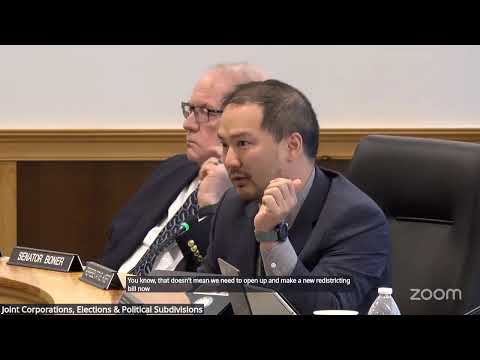
Public comment was substantial and divided. Former state lawmakers and county officials who participated in previous redistricting efforts said House District 33 and the Fremont County configuration were created around community-of‑interest considerations and urged careful, evidence-based study before any change. Several tribal leaders and residents said the reservation and its constituent communities have distinctive governmental, cultural and economic interests that justify specific representation and warned that hasty action or litigation could harm local governance. Civic groups and public commenters urged the committee to hold extended stakeholder consultation and to avoid precipitous action in the middle of an election year.
The committee did not direct immediate redrawing of any legislative or county maps. Members and staff agreed to continue the topic at future meetings, to solicit county‑level review of the RDP block-boundary submissions, and to await any formal legal developments or formal requests from the Governor or the Attorney General.
What’s next: LSO will continue to submit and refine block-boundary suggestions to the Census Bureau during the RDP phase; the committee signaled it will hold additional hearings and stakeholder outreach before considering redistricting or legislative remedies.