Get Full Government Meeting Transcripts, Videos, & Alerts Forever!
Get email alerts on the Pesticide Policy topic
No spam. Unsubscribe anytime.
Committee opens discussion on town pesticide practices and pollinator protection
Summary
Staff told the committee the town contracts a vendor that spot‑sprays landscape beds and guard rails, but members and residents urged steps to protect pollinators, designate native beds as unsprayed, educate vendors and explore organic contractors; attendees noted a recent state law limiting residential neonicotinoids (effective Oct 2027) and cited local herbicide damage to public plantings.
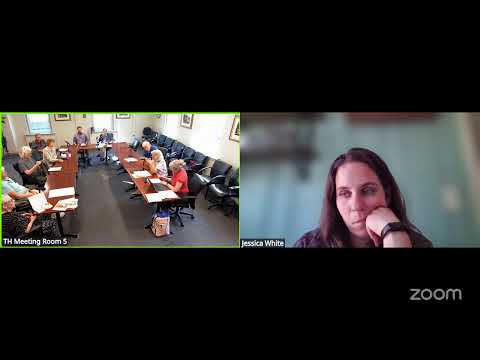
The committee opened a broad conversation about pesticide and herbicide use on town properties and in the community. Staff reported the town engages a vendor that ‘‘spot sprays’’ beds and certain fence or guard‑rail lines and said broad‑area spraying was not reported; the director of public works told staff that pollinator‑friendly designations for some town beds could be accommodated.
Residents and committee members asked to know which products are used and urged more visible town leadership on the issue. One resident recounted a recent incident at a municipal building where a non‑selective herbicide was applied and killed installed plantings, underscoring concerns about maintenance contracts, vendor training and oversight.
Several members pointed to a new state law (noted in the meeting) that phases in residential prohibitions on neonicotinoids by October 2027 and suggested Bloomfield could lead by modeling different maintenance practices, educating vendors and contracting organic or certified pollinator‑friendly landscapers. Staff and members suggested next steps including querying DPW for the vendor's product list, exploring a pilot designation of native/pollinator beds that would not be sprayed, and public education via partner groups (Pollinator Pathways, Trees for Bloomfield).
Why it matters: pesticide choices affect pollinators, local biodiversity and community perception of town landscaping. Committee members argued that better vendor guidance and a public inventory of unsprayed native beds would help reduce unintended damage and model best practices.
Next steps: staff will request details from DPW about current products and spraying schedules, explore whether the council can adopt restrictions or designations for town‑managed properties, and coordinate with local groups on outreach and potential pilot areas.