Get Full Government Meeting Transcripts, Videos, & Alerts Forever!
Get email alerts on the Student Financial Aid Fraud topic
No spam. Unsubscribe anytime.
Congressman Burgess Owens urges law to block student-aid fraud and require ID checks
Summary
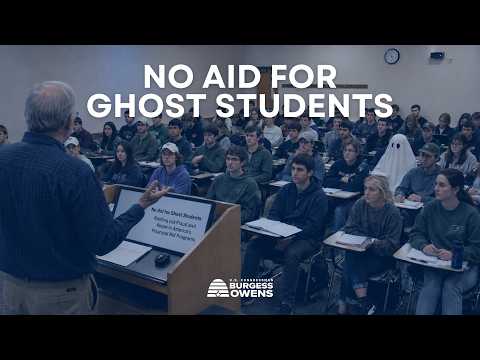
Congressman Burgess Owens, vice chairman of the Education Workforce Committee, urged passage of the "No Aid for Student Act," saying it would require the Department of Education to screen FAFSA applicants for identity fraud and require schools to verify flagged applications before disbursing federal aid.
Congressman Burgess Owens, vice chairman of the Education Workforce Committee, urged the House to pass the "No Aid for Student Act," saying the measure would require the Department of Education to screen student-aid applications for identity fraud and direct schools to verify flagged applicants before any federal aid is disbursed.
Owens framed the measure as a protection for both students and taxpayers, telling colleagues that "students and taxpayers deserve a student aid system that supports opportunity, not fraud." He described a pattern in which "bad actors use fake and stolen IDs to enroll in classes, collect refundable portions of student aid, and then disappear," leaving taxpayers liable and denying legitimate students access to assistance.
The bill, as described by Owens, would require the Department of Education to deploy identity-fraud detection systems to screen applications and to escalate suspicious applications for verification. Owens said institutions could verify identity through in-person checks or a variety of other secure methods, and that schools would be required to keep records of successful verifications. The bill would also direct the department to develop guidelines to ensure consistent verification procedures across institutions.
Owens cited recent Department of Education activity, saying the department "blocked more than $1 billion in attempted fraud" last year and that a new detection tool added to the FAFSA "blocked $60 million in the first two weeks." He characterized those safeguards as effective but argued the protections should be enshrined in law so they cannot be rolled back.
He further said the legislation would promote oversight and transparency by requiring the Department of Education to provide Congress with a written description of its fraud-detection system, to notify lawmakers of substantial changes, and to report annually on the system's use and effectiveness. Owens also said safeguards had been rolled back under the Biden administration and that putting protections into statute would prevent future rollbacks; the transcript records the allegation but includes no response or corroboration in this proceeding.
"This is common-sense safeguard to ensure taxpayer dollars are kept out of the hands of fraudsters," Owens said in conclusion, and he urged his colleagues to support the bill. No formal vote or motion on the measure appears in the provided transcript.