Get Full Government Meeting Transcripts, Videos, & Alerts Forever!
Get email alerts on the Land Use topic
No spam. Unsubscribe anytime.
Louisa County planners advance draft density framework, TDR incentives to steer growth toward serviceable areas
Summary
At a June work session, county staff proposed raising R1/R2 minimum lot sizes to 2.5 acres, creating a baseline that would enable transferable development rights (TDRs) so developers could buy rights to regain higher densities in growth areas; commissioners raised concerns about costs, enforcement and staff capacity.
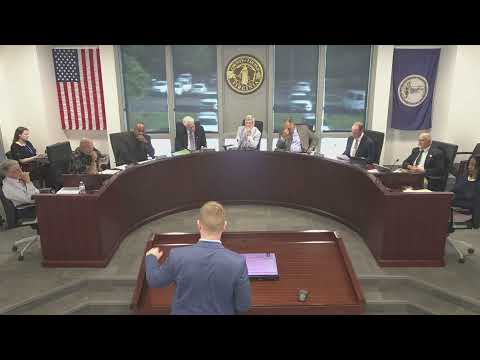
County staff presented a draft residential density framework at the Louisa County Planning Commission work session, proposing to increase minimum lot sizes in R1 and R2 from 1.5 acres to 2.5 acres and to pair that change with a transfer‑of‑development‑rights (TDR) market that would let developers buy rights from rural parcels to regain higher densities in designated growth areas. The presentation framed the package as a way to reduce rural land fragmentation, better align development with available infrastructure, and preserve agricultural and forestal acreage.
Why it matters: Planning staff told commissioners the county continues to experience rapid residential growth, straining school capacity and public services. The draft aims to slow residential built‑out in rural areas while directing growth where water, sewer and other services can support it.
Staff outlined the TDR mechanism as a market tool: properties in rural areas could sell development rights (permanently relinquishing them), and developers in growth areas could purchase those rights to increase allowable density above the new 2.5‑acre baseline. “If they purchase development rights, then they could get back to the 1.5 acres,” staff said, describing recording practices that would tie sold rights to plats and deeds to preserve rural parcels.
The draft also sets a baseline PUD (planned unit development) density (presented as 75 dwelling units per acre) with additional density available only through performance‑based bonuses and TDR participation. Staff emphasized that density bonuses would be tied to specific community benefits such as workforce or affordable housing, infrastructure improvements, open space and other public benefits rather than granted automatically.
Planners proposed several tools to ensure balanced development in PUDs, including defining neighborhood‑oriented commercial uses, adopting a minimum commercial square‑footage ratio tied to housing units, and staging residential occupancy so commercial components are delivered. One example floated was requiring commercial site plans to be approved and limiting the share of residential certificates of occupancy (COs) that can be issued before commercial permits or COs have been obtained.
Commissioners said they supported the overall direction but pressed staff on tradeoffs and implementation. Several raised the risk that lower baseline density could increase per‑unit development costs and potentially push housing prices higher unless density incentives were widely used. Commissioners also flagged the administrative burden of operating a TDR registry and verifying parcel eligibility, cautioning that the program would require staff training, possible additional hires and careful monitoring.
On infrastructure, staff said capital improvement plans are in progress and that gradual, monitored implementation is necessary: “We could start, but if we were to push all development into growth areas tomorrow, I don’t know how long that would be sustainable,” a staffer said, noting uncertainty if all developers immediately pursued TDRs.
Next steps: Staff said Step Three of the multi‑part program will address preservation tools (purchase of development rights and additional TDR mechanics) at the next meeting, and commissioners asked staff to refine the regulatory language, consider how to verify permanence and conveyance of transferred rights, and identify administrative requirements before bringing an ordinance forward for public hearing.