Get Full Government Meeting Transcripts, Videos, & Alerts Forever!
Get email alerts on the Program Overview topic
No spam. Unsubscribe anytime.
Massachusetts MVP 2.0 webinar highlights new portal, playbook and 32 seed-project awards
Summary
State MVP staff described program updates — an 'eco one stop' grant portal, a Climate Resilience Playbook and newly awarded MVP 2.0 seed grants — and outlined how the 2.0 process links community engagement to $50,000 seed projects.
The Executive Office of Energy and Environmental Affairs’ Municipal Vulnerability Preparedness (MVP) team used a statewide webinar to explain changes to the program and resources for communities pursuing climate resilience. Carolyn Markowitz, Greater Boston regional coordinator for MVP, announced a new “eco one stop” application portal for MVP action grants and related EEA funding and pointed participants to an online Climate Resilience Playbook to guide local projects.
Why it matters: the portal and playbook are intended to lower administrative barriers and speed up communities’ ability to apply for grants and implement resilience actions. Markowitz said the eco one stop is open for applications and that the suite of resources is being posted on the program website.
Program scale and purpose: Andrew Smith, a regional coordinator, summarized MVP’s reach and funding history, noting the program has worked across almost the entire Commonwealth and has supported action grants for multiple fiscal years. “We’ve awarded up to, you know, $210 million in climate resilience funding over the past near decade,” he said, framing MVP as a major state investment in local adaptation work.
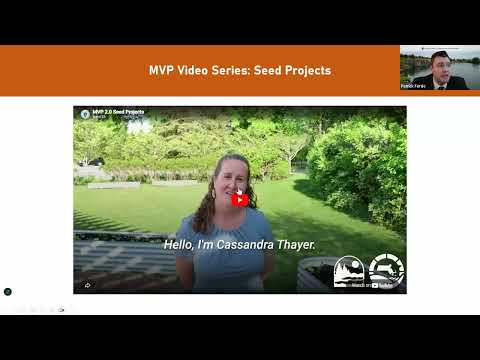
What MVP 2.0 does differently: a program staff member described MVP 2.0 as an iterative planning process that focuses on community teams, equity, language access and translating priorities into small, actionable “seed projects.” Each seed project receives $50,000 and is expected to be deliverable within roughly nine months, the presenters said.
Next steps: staff encouraged municipalities, tribal governments and other eligible political subdivisions to use the eco one stop to apply and to consult their regional coordinator for technical assistance. The webinar also promoted a short video showing seed projects around the state and announced that the third round of MVP 2.0 grants has been awarded to 32 communities.
The webinar concluded with three town case studies (Lincoln, Arlington and Montague) that illustrated how communities are using seed funds to pilot local approaches that tie planning to near-term action.