Get Full Government Meeting Transcripts, Videos, & Alerts Forever!
Get email alerts on the Governance Authority topic
No spam. Unsubscribe anytime.
Attorney tells light board a section of its April 28 resolution likely exceeds its legal authority
Summary
Town attorney told the Hall Municipal Light Plant board that one section of the board's April 28 resolution — which directed staff to produce grant application materials — likely exceeds the board's authority under Chapter 164 and the town's special act; the board agreed to seek information and to revisit the matter at a June 10 joint meeting.
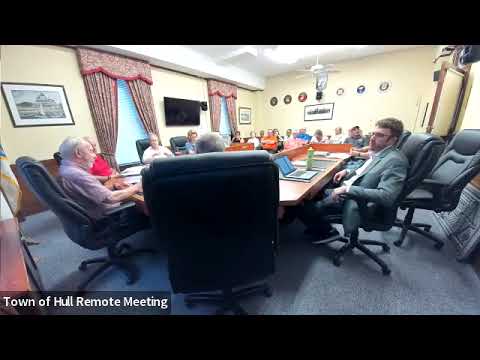
Tom Burns, chair of the Hall Municipal Light Plant Board, presided over a tense exchange on June 8 after the board read Section 5 of an April 28 resolution that directed the town manager and light-plant management to produce accounting and application details for certain grant applications.
Attorney Nick, present to advise the board, told members that while most sections of the resolution were legally defensible, Section 5 as written'which he said attempted to direct the town manager and light-plant staff to produce information'likely exceeded the board's authority under Chapter 164 of the Massachusetts General Laws and the town's special act. "You can ask for that information," Nick said, "but the way it's worded, it goes beyond your scope and it goes beyond your ability to direct the manager to do that under either 164 or under the special act." (Nick, attorney)
Nick reviewed each numbered part of the resolution, calling numbers one and two "perfectly valid" and calling number four "a little iffy" depending on phrasing; he recommended treating complex or multipart resolutions as separate numbered votes in the future to avoid ambiguity. He urged the board to coordinate with the town manager and the select board rather than attempting to use the resolution to compel staff action.
Board members pressed for clarity about the practical impact. One commissioner said the board did not intend to "direct" staff so much as to record what was discussed and request the records; another insisted the board needed the paper trail for grant administration and public transparency. Jen (the town manager) said she did not have all requested material at the meeting but would provide updates at the June 10 joint meeting with the select board and light-plant staff.
Nick also explained broader governance constraints and options for capital funding, including the role of depreciation funds, potential borrowing and DPU oversight. He told members that whether the light board can hire independent counsel is a separate legal question that may turn on the town's special charter and that town counsel should be asked to weigh in.
The board agreed to note Section 5 in the minutes as discussed, to take no immediate enforcement action, and to revisit the issues at a June 10 joint meeting with the select board and consultants. Several commissioners emphasized cooperation with the select board and town manager as the most practical way to resolve outstanding questions about grant applications and project design.
The next procedural step the board set was to request the specific grant materials and accounting records from the manager in advance of the June 10 joint meeting and to seek a written legal opinion from town counsel if the board wished further clarity.