Get Full Government Meeting Transcripts, Videos, & Alerts Forever!
Get email alerts on the Building Codes topic
No spam. Unsubscribe anytime.
Mead hears overview of 2024 code changes including sleeping-loft rules, EV-ready wiring and solar-ready roofs
Summary
A Safe Build representative briefed Mead trustees on technical updates in the 2024 ICC codes and Colorado model electrical/solar requirements, highlighting new standards for sleeping lofts and handrails, protections for battery energy storage and provisions requiring future-proof electrical space for gas appliances and EV chargers.
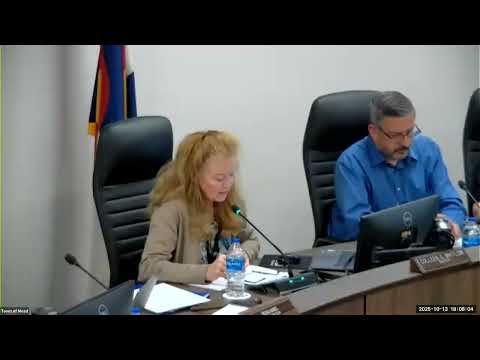
Matt Denny of Safe Build presented a comprehensive summary of the 2024 International Code updates to the Mead Board of Trustees on Oct. 13, 2025, and walked trustees through technical changes that could affect homebuilders, remodelers and code administration.
Denny said the 2024 cycle reorganizes administrative and compliance language and adds new, specific technical sections. He highlighted three items likely to affect local residential construction: explicit standards for sleeping lofts and associated handrail provisions; clarified rules for two-family dwellings and exterior firewall requirements where homes are in close proximity; and expanded provisions addressing energy storage and vehicle protection in garages, including requirements intended to reduce the risk of battery impact and fire.
On energy and electrification, Denny summarized the Colorado model electric and solar-ready code that accompanies the updated ICC books. Under the state model, new homes must provide provisions that would allow an all-electric option for major appliances that are provided as gas at initial construction (for example, providing an electric outlet capable of accommodating a future electric range or dryer) and must leave panel capacity or wiring pathing so homes are "solar-ready" and EV-ready (40 amps, 240 volts receptacle provision). He noted these measures are intended to reduce retrofit costs for future occupants who wish to transition from gas to electric appliances or add chargers.
Denny also described how the 2024 code addresses energy storage (home-mounted battery systems) by recommending 20-minute self-closing doors to rooms that contain battery storage, physical protection to prevent vehicle impact on garage-mounted batteries and, in some cases, sprinkler protection for large commercial battery storage.
On wildfire resiliency, Denny said the expected statewide wildfire-resiliency map and related code guidance has been delayed and is now anticipated in October 2026; he recommended jurisdictions monitor the map because it will affect design and material requirements in higher-risk zones.
Trustees asked detailed follow-up questions about when state-level Colorado Energy Office rules apply, whether the new provisions are mandatory for repairs and remodels, and how the 2024 existing-building code treats historic structures. Denny and staff offered to provide written clarifications on commercial-remodel thresholds and to return with more precise answers.
Denny concluded that much of the 2024 code modernizes long-standing technical standards and in many cases increases options for builders to meet safety and energy goals without dramatically increasing cost if hybrid compliance approaches are used.
"Every three years the International Code Council writes a new code," Denny told the board, noting adoption is a routine but consequential step for the town and its building applicants.