Get Full Government Meeting Transcripts, Videos, & Alerts Forever!
Get email alerts on the Sanitary Finance topic
No spam. Unsubscribe anytime.
Council tables transfer tied to sanitary-district loan; members demand clearer financial reports
Summary
Lake Station councilors postponed action on Resolution 2026-01, a temporary transfer intended to extend repayment of an outstanding sanitary-district loan, after hearing that the district has repeatedly renewed portions of a $1.2 million obligation and that a recent $200,000 payment reduced the balance to $400,000; councilmembers asked staff for detailed fund reports before deciding.
The Lake Station City Council on June 10 moved to table Resolution 2026-01, a temporary transfer intended to extend repayment of an outstanding loan between the city’s general fund and the sanitary district, after members pressed administration officials for clearer accounting.
Mr. Dalton, a presenter invited by the chair, told the council the resolution would reduce the loan’s outstanding balance from $600,000 to $400,000 because the sanitary district recently paid $200,000, and would ‘‘renew the remaining $400,000 loan balance so that it could then be extended one more year to final repayment June 30th of 2027,’’ a change he described as a renewal rather than new borrowing.
Council members said they understand the sanitary district needs cash flow flexibility but raised repeated concerns about transparency in how sanitary funds have been spent. Several members noted that the loan originated as approximately $1.2 million and has been reduced in installments over multiple years. "You borrow money and then you don't pay it back and then you come to us and say, ‘Hey, wait a minute,’" one member said, summarizing the council’s frustration.
Brenda, a finance staff member, offered to produce and circulate fund-level reports for the sanitary fund (fund 6601) showing revenue, expenditures and running balances to help the council trace where money has gone. She said those reports can show "every in, every out" for the year and volunteered to send them to councilmembers.
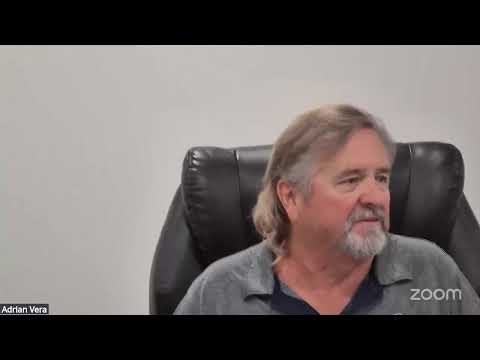
Adrian, who represents sanitary operations at the meeting, said that money from prior borrowing has been spent on infrastructure such as multiple lift-station rebuilds and a major force-main replacement planned to increase sewer capacity for new housing. "All this money is being spent on infrastructure," Adrian said, noting that capacity constraints currently limit the city’s ability to accept sewage from new developments.
Council members framed their request narrowly: they did not reject infrastructure spending but asked for routine, transparent reporting and for the sanitary board or mayoral office to be more forthcoming when fund transfers or renewals are sought. One member asked whether the city would be legally penalized for renewing the loan; another confirmed state statute requires a payment schedule (June 30 due date) but that extensions under a renewal are within the council’s legal authority and—per comments in the meeting—no interest was being charged in the current structure.
Because councilmembers requested more documentation and participation by department leadership, the council agreed to postpone final action and to revisit the resolution at the next meeting after staff provides the requested detailed fund reports and any additional explanation from sanitary-district leadership.
What happens next: the council tabled the resolution for additional information; staff agreed to deliver fund-level reports (fund 6601) and the council expects an administrative representative to follow up before the item returns for a final vote.