Get Full Government Meeting Transcripts, Videos, & Alerts Forever!
Get email alerts on the Rack Line topic
No spam. Unsubscribe anytime.
Resident urges environmental education and restraint on 'rack' removal; staff cites ordinance and conditional raking rules
Summary
At public comment, Terry Kaine urged the committee to protect the 'rack line' (red drift algae) that traps sand and feeds birds and to boost public education; staff explained the town code largely prohibits raking, but allows limited, permitted actions for hazardous accumulations and during specific conditions.
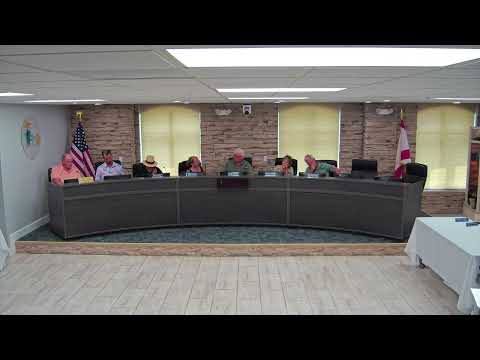
A longtime barrier‑island resident told the MURF committee June 10 that the island’s rack line — the red drift algae that traps sand and nourishes birds — is both an ecological asset and an economic draw for birding tourism, and she urged the town to increase environmental education and restoration of guided walks.
"Our environment is our economic engine," resident Terry Kaine said during public comment, warning that mechanical raking removes sand and harms nesting and feeding habitat. Kaine recommended clearer public messaging — a "do‑you‑know" web page, guided walks, and more outreach so visitors and property owners understand the ordinance and the ecology of barrier islands.
Staff response and ordinance: Chad, the staff liaison, told the committee the town has permitting flexibility but generally prohibits mechanical raking; staff can thin or disperse algae at the tideline and may collect it only after several tidal cycles or when permitted conditions are met. A member later read Fort Myers Beach code language (effective April 8, 2026), which states that raking the rack line is prohibited in normal circumstances; no mechanical or hand raking may take place seaward of the rack line or within 10 feet landward, with narrow exceptions (hazardous conditions, specific rules during May 1–Oct 31 sea‑turtle season) and a D permit required for raking.
Practical concerns: Committee members acknowledged the rack’s value for sand trapping and birds and discussed operational challenges when accumulated algae becomes malodorous or poses health or nuisance concerns. Staff noted disposal costs (trucking/dumpster), potential beneficial‑use research (compost or biofuel), and heavy‑metal testing concerns cited in some studies.
Next steps: Committee members thanked Kaine and noted staff will continue to use permits, monitors and outreach to balance habitat protection and nuisance mitigation. The committee did not change the ordinance; the discussion reinforced that current code and permitting guide response.
Provenance: Public comment by Terry Kaine and staff explanation; code citation read during meeting.