Get Full Government Meeting Transcripts, Videos, & Alerts Forever!
Get email alerts on the Cell Tower topic
No spam. Unsubscribe anytime.
Residents urge Cohasset Select Board to seek alternatives to Wheelwright Park cell tower
Summary
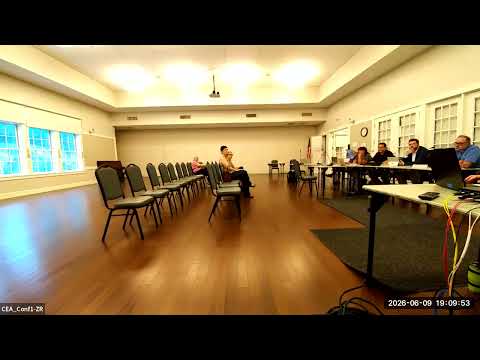
Residents and members of the Open Space Committee pressed the Cohasset Select Board on June 9 to reconsider a proposed monopole in Wheelwright Park, citing a Wheelwright family trust, Article 97, and the availability of small-cell alternatives; the board moved to executive session.
Residents and members of the town’s Open Space Committee urged the Cohasset Select Board on Tuesday to abandon plans for a monopole cell tower in Wheelwright Park and pursue alternative technologies and locations.
Fred Zotos of 28 Old Coach Road opened public comment by asking whether the town had reviewed a legal opinion about whether earlier property transfers violated the Wheelwright family trust and whether the attorney general had weighed in. "Whether or not the original transfer of the property ... violated terms of the trust" was, he said, a question the town should resolve before proceeding. He also told the board that small-cell technology is already installed nearby and said, "this entire exercise is now obsolete with respect to a large cell tower."
The concern carried through to the Open Space Committee. "When the land is conveyed in trust for a specific charitable purpose the trust doesn't expire by passage of time," said Ginny LeClaire, chair of the Open Space Committee, citing the Wheelwright family's will and Article 97. "No amount of time cures a trustee's deviation from the expressed terms of the trust without court authorization or legislative action," she said, urging the board to pursue an alternative location for the tower.
Other residents echoed those points. Jennifer Chew said mistakes over use of land can be costly: it "ended up costing them many millions of dollars more than it would have cost them if they had just done the right thing from the beginning." Jenny LaClair, speaking for the Open Space Committee, said the citizens petition had been intended "as a binding resolution," though she noted KP Law advised it was not binding. Connie Afshar emphasized environmental and recreational concerns and urged the board to evaluate higher or less intrusive locations and newer cell technologies before allowing a monopole construction.
No Select Board member made a substantive response during public comment. After the public comment period the board voted to meet in executive session to confer further.
The meeting moved to executive session by motion and roll call vote; the board recessed and said it would reconvene after the closed session. No final decision on the park or any contract was recorded in the public portion of the meeting.
What happens next: the board went into executive session to discuss the matter; residents and committee members asked the Select Board to publish or share any legal analysis and to explore small-cell and alternative-location options before moving forward.