Get Full Government Meeting Transcripts, Videos, & Alerts Forever!
Get email alerts on the Energy Storage Regulation topic
No spam. Unsubscribe anytime.
Hurley hearing on Local Law No. 2 draws residents calling for tighter ban on utility‑scale battery storage
Summary
At a public hearing on Local Law No. 2, residents and stakeholders urged the Hurley Town Board to tighten or preserve a townwide ban on grid-scale battery energy storage, citing loopholes in site‑plan exemptions, energy‑density formulas and emergency-response requirements. The board left the hearing open to revise the draft and accept written comments.
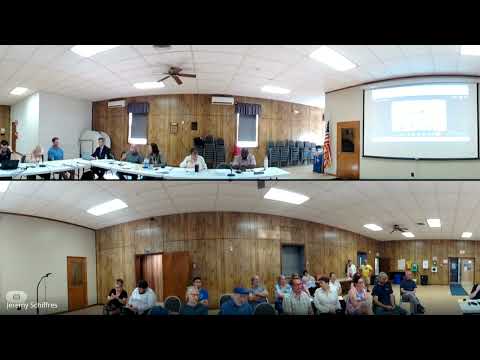
The Hurley Town Board opened a public hearing on Local Law No. 2, an amendment to Chapter 27 of the town code that would regulate battery energy storage systems, and heard extended public comment focusing on the potential for utility‑scale battery projects to avoid local restrictions.
Tim Kelly, a town resident who signed up to speak, praised portions of the draft law but warned that key sections need clarification. "The most important provisions are the townwide uh ban on gas over 80 kilowatt hours and the table of use regulations showing that a battery energy storage system serving the public electric utility grid is not permitted in any zoning system," Kelly said, urging the board to close site‑plan and labeling loopholes and to add anti‑circumvention language.
Other residents and invited speakers pressed the board to tighten the energy‑density formula and to require fire‑department review and funded emergency‑response drills for outdoor battery systems. One commenter said the formula in the draft could, as written, allow excessive energy capacity on small sites and urged the board either to replace the formula with a clear maximum energy capacity limit or to prohibit standalone merchant facilities outright.
Speakers also discussed the interplay between local regulation and possible future state or federal authority over energy siting; several remarked that no overriding authority currently authorizes utility‑scale battery siting in a way that would automatically preempt local control. Commenters recommended explicit anti‑circumvention and fallback language so that a developer could not simply relabel a grid‑serving battery as a "warehouse," "accessory solar component," or other use to evade local restrictions.
The board acknowledged the concerns and said it would revise the draft to address identified loopholes and to clarify definitions. The public hearing will be renoticed once those modifications are made; the board will continue to accept written comments in the interim. No final vote was taken at the meeting.
Why it matters: Battery storage projects can be large in scale and have long‑term land‑use, safety and emergency‑response implications. Residents asked the town to use precise statutory language to preserve local land‑use authority and to minimize public‑safety risk.
Next steps: The board will revise the draft local law, renotice the public hearing and accept written comments before any adoption vote.