Get Full Government Meeting Transcripts, Videos, & Alerts Forever!
Get email alerts on the Excavation Permits topic
No spam. Unsubscribe anytime.
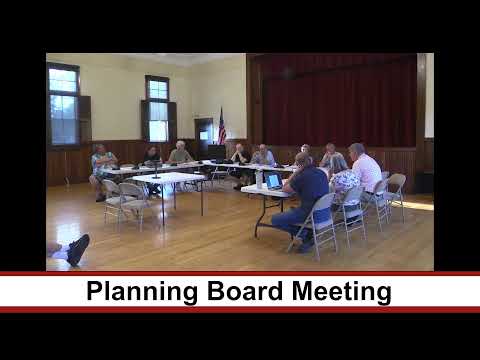
Planning board reviews RSA 155-E framework for excavation permits, delays decision on Johnson pit extension
Summary
Members reviewed RSA 155-E requirements for excavation regulation, reclamation bonds, AOT thresholds and grandfathering rules, and agreed to invite the Johnson pit operator to the next meeting rather than decide a timeline extension in his absence.
At its June 11 meeting the Swansea Planning Board reviewed excavation-permit procedures under RSA 155-E and discussed a specific case — the so-called Johnson pit — where the operator sought more time to prepare a permit.
Staff summarized ten points from the statute and local practice: excavation and processing of earth material is permitted in rural, agricultural, business and industrial districts by virtue of zoning that adopts RSA 155-E by reference; the planning board is the local regulator for excavation, including setting reclamation bonds and permitting limited exceptions; AOT (alteration of terrain) triggers commonly apply when activity moves more than 100,000 square feet cumulatively over a 10-year period; and the town historically has used a five-year renewal cycle for excavation permits though that is discretionary.
The board reviewed the grandfathering standard found in case law (a 1989 decision summarized in the staff memo) that sets a three-prong test for continued operations without a permit: (1) excavation activities were actively pursued when the statute became effective; (2) objective manifestations show the area was intended for excavation; and (3) continued operations will not have a substantially different and adverse impact on the neighborhood. The transcript shows staff and members noted practical difficulty proving earlier written notices existed because town records are incomplete.
On the Johnson pit, members said the operator had previously been given a one-year compliance period to prepare a permit but asked for more time because the estimated cost to prepare a permit is around $10,000. Several members said they were uncomfortable making a site-specific extension decision without the applicant present; others were willing to discuss adopting a standard extension period (18–24 months was suggested). The board agreed to invite Mr. Johnson to the next meeting and place the item under 'other business' so the operator can present any extenuating circumstances.
What this means: the board has a clear procedural framework for excavation permits anchored to RSA 155-E and recognized judicial interpretations on grandfathering, but the Johnson pit request will be handled with the applicant present so the board can hear specific facts. The transcript shows proposed options but no final decision on a timeline extension was made at this meeting.
Next steps: staff will invite Mr. Johnson to the next planning-board meeting and board members will consider a formal extension standard only after hearing from the applicant.