Get Full Government Meeting Transcripts, Videos, & Alerts Forever!
Get email alerts on the Site Plan Regulations topic
No spam. Unsubscribe anytime.
Swansea planning board reworks site-plan language amid legal counsel guidance
Summary
At a June 11 public hearing, the Swansea Planning Board debated edits to site-plan review regulations — including tying approval expirations to RSA timelines, clarifying what constitutes final approval for appeal purposes, and distinguishing conditions that require compliance hearings. The transcript records a motion and vote but does not show a clear final tally.
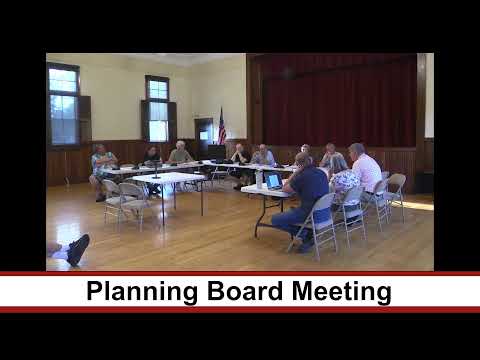
The Swansea Planning Board continued a public hearing June 11 on proposed amendments to its site-plan review regulations, focusing on timelines for expiration, the distinction between a board decision and final approval, and clearer wording on conditional approvals.
Chair Victoria RC Ames read the revised draft, telling members the changes “would change expiration timelines for site plans, define explicit conditions for active and substantial development, and establish clearer language for conditional approvals.” The draft inserts an ‘unless’ clause in section 6C to tie expiration to whether “active and substantial development has occurred.”
Members debated whether approvals should lapse after one year or three years. Several members recalled an earlier vote to limit some timelines to a year; legal counsel’s written recommendation was cited as the rationale for a three-year window. Victoria read the attorney’s advice, summarizing Cordell’s view that shorter local expirations are legally fragile because an applicant who files an identical application within the statutory three-year period would still be protected by state law. “In his opinion, he doesn’t think [requiring a new approval within the shorter period] is valid,” she said.
The board also discussed adding a new clause (6G) to specify that final approval is obtained only after all conditions are met, while the board’s vote to approve or disapprove constitutes a “final decision” for purposes of appeal under RSA 677:15. Members refined the wording (debating terms such as “obtained” vs. “granted”) to make explicit the difference between the board’s decision and the subsequent final approval when conditions are satisfied.
On conditional approvals (Article 7) the board agreed to clarify the text so it distinguishes conditions that require a compliance hearing (conditions precedent) from those that do not (conditions subsequent) while emphasizing that all conditions must ultimately be satisfied to obtain final approval.
A member moved to approve the set of drafted edits (including inserting ‘unless’ in 6C, adding the 6G language referencing RSA 677:15, clarifying Article 7, and changing a five-year exemption to seven years to match state law). The motion was seconded and the board proceeded to a vote. The available transcript records members calling for the vote and at least one speaker saying “I opposed,” but it does not record a clear final tally or an explicit “motion carries” announcement for that motion in the provided segments.
What this means: the board has read and debated the legal framing of expiration and appeals and produced a clarified draft that ties local practice to state RSA language and distinguishes board decisions from final approvals. The transcript does not unambiguously record whether the board’s motion to adopt the edits was finalized at this meeting; staff follow-up (and the public minutes) should be checked for the formal vote count and the final ordinance text.
Next steps: staff indicated they will incorporate the agreed wording and circulate the revised draft; the board discussed moving the item forward for formal acceptance once the final text and citations (including RSA 677:15) are verified.