Get Full Government Meeting Transcripts, Videos, & Alerts Forever!
Get email alerts on the Traffic Safety topic
No spam. Unsubscribe anytime.
Fremont residents press council to curb semi-truck traffic on Broad Street
Summary
Several North Broad Street residents told the Fremont City Council that heavy truck traffic has returned after recent construction, urging clearer signage, lower speed limits, pedestrian safety measures and stronger enforcement to reduce noise, engine braking and safety risks.
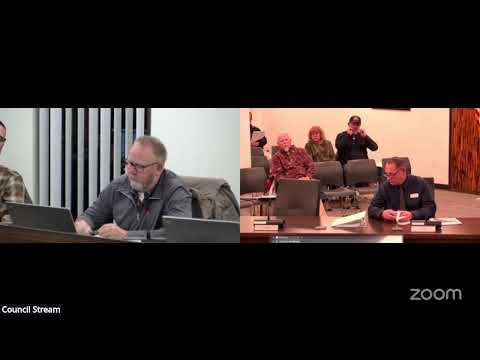
Public commenters at the Jan. 27 Fremont City Council meeting urged elected officials to take concrete steps to stop large trucks from using North Broad Street as a through route.
Ellen Lund, who identified herself as a Broad Street resident, said signage does not reflect Ordinance 5708’s restriction to local trucks only and asked the council to change signage, lower the speed limit (she said 25 would be ideal, 30 acceptable), install a pedestrian-controlled signal at 19th and Broad and prioritize enforcement. “Signage, at least at my end of Broad Street, does not discourage use,” Lund said, adding she rarely sees trucks pulled over despite frequent speeding and engine braking.
Jean Chaplair called on the council to use the city’s authority after a jurisdictional transfer from NDOT to establish truck districts and weight limits (she suggested a 26,000‑pound threshold), implement calming measures such as lane narrowing and turn restrictions, and submit authoritative routing data to commercial navigation providers so GPS systems stop routing semis down Broad Street.
Other speakers described persistent safety and quality‑of‑life impacts. Loretta Maestro recounted past semi-related crashes and said the increased truck presence near homes and a planned park “is setting the stage for another disaster.” Don Atwell suggested two broad responses: redesign and rebuild Broad Street to accommodate heavier loads or reduce speeds and add four‑way stops to push trucks to the bypass.
The residents tied their requests to specific remedies: clearer legally enforceable signage, updated routing data for mapping providers, targeted enforcement by police, permanent or temporary traffic‑calming infrastructure and lower speed limits. The council did not take action on these requests during the public comment period; the comments were entered for council consideration later in the agenda.
Why it matters: Broad Street is residential in character and residents said heavier truck traffic increases safety risk (including potential HazMat exposures), noise and property impacts. Several speakers pointed to a recent jurisdictional change that gives the city authority to set truck restrictions and urged the council to use that authority.
What’s next: Speakers requested that the council pursue ordinance changes, updated signage and coordination with mapping providers; no specific council vote or ordinance adoption on Broad Street traffic appears in the meeting transcript.
Speakers quoted in this article are drawn from the public comment period: Ellen Lund (resident), Jean Chaplair (resident), Loretta Maestro (resident), Don Atwell (resident).