Get Full Government Meeting Transcripts, Videos, & Alerts Forever!
Get email alerts on the Land Use Site Plan topic
No spam. Unsubscribe anytime.
Nottingham planning board continues review of Precision Cut Lumber’s chicken‑house expansion after dispute over third‑party review
Summary
The Nottingham Planning Board continued consideration of Precision Cut Lumber LLC’s site‑plan for two new chicken houses after a heated discussion over required third‑party technical review, approval of several survey and wetlands waivers, and scheduling of further peer review results for July 8.
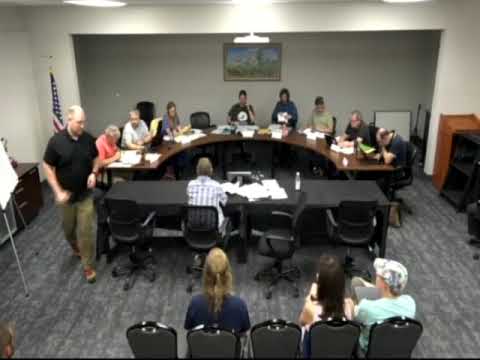
Drew Stevens, chair of the Nottingham Planning Board, continued the board’s review on June 10 of a site‑plan amendment from Precision Cut Lumber LLC to build two 56‑by‑100‑foot chicken houses at 123 Old Turnpike Road.
Ian McKinnon, a professional engineer with Jones & Beach Engineers representing Precision Cut Lumber, told the board the application submitted on May 19 removes a previously proposed phase‑2 hatchery structure and adds plan notes clarifying disturbed soils, setback distances and lot‑coverage calculations. “We removed the phase 2 building,” McKinnon said, adding the updated plans show a temporary hoop house location and tabulate lot coverage and disturbance so the project does not trigger alteration‑of‑terrain permitting.
The session centered on whether the board’s previously adopted vote to obtain a third‑party technical review at the applicant’s expense should stand. Board members said the independent review is necessary to produce recommended conditions and to assess potential onsite impacts, including drainage and operational controls; Blair (town staff) reminded the group an appeal of the board’s administrative actions related to the project had been filed and described the procedural risks if the board acts before the appeal is resolved.
“This board voted to have a third‑party review done,” Stevens said during the exchange, pressing the applicant to accept the scope or propose a qualified alternative. The applicant said he has engaged USDA NRCS and scheduled a June 26 site visit to develop a farm‑specific best‑management‑practice (BMP) manual and argued that federal assistance could reduce duplication and cost. “Sarah [at USDA NRCS] said, ‘You’re too small to have to have this done’ — but I want it done,” the applicant said, urging the board to consider USDA work and to remove the phase‑2 analysis from the peer‑review scope.
Board members and the applicant debated who chooses and pays for consultants, quoting RSA authority allowing planning boards to require and charge applicants for third‑party reviews. Stevens and other members compared the review to a bank‑appointed appraisal, saying the town must be confident the reviewer protects public interests and that some costs are reasonable to obtain necessary technical data.
The board also debated technical details of a proposed concrete composting/manure pad. McKinnon described a recommended 2‑inch lip around the pad and estimated a roughly 7,000‑gallon 2‑inch holding capacity for a 55‑by‑110‑foot slab; he and residents discussed absorption by active compost piles, winter performance and where any overflow would be routed.
During public comment, residents submitted written and oral testimony raising concerns about wetland mapping, detention‑basin maintenance, the applicant’s past after‑the‑fact NHDES permit for site disturbance, and whether the town can enforce BMPs and site‑plan conditions. Nathan Fury’s written comment urged the board to require a full survey and flagged uncertainty over how bird counts are tallied and reported when regulatory thresholds are reached. Neighbors also requested additional sitewalks and asked for stricter third‑party scrutiny rather than relying only on USDA guidance.
Despite the applicant’s objections, the board voted during the public hearing to grant three of the applicant’s waiver requests affecting survey, topography, and a wetland certification requirement for the disturbed portion of the site (the board recorded motions granting the waivers). The board repeatedly emphasized it still needs a technical peer‑review to recommend enforceable conditions. Given timing constraints for selecting a consultant, escrow requirements and the statutory review periods, the board continued case 260007 to its July 8 meeting so a third‑party review can be completed and presented.
What’s next: the board asked the applicant to escrow funds for the review scope and to engage with the peer‑review process so that the third‑party consultant’s report — due under the board’s procedure and timing rules — will be available for discussion at the July 8 meeting. The board also expects to receive the USDA NRCS scope and any BMP deliverables applicant wishes to include in the record.