Get Full Government Meeting Transcripts, Videos, & Alerts Forever!
Get email alerts on the State Finance topic
No spam. Unsubscribe anytime.
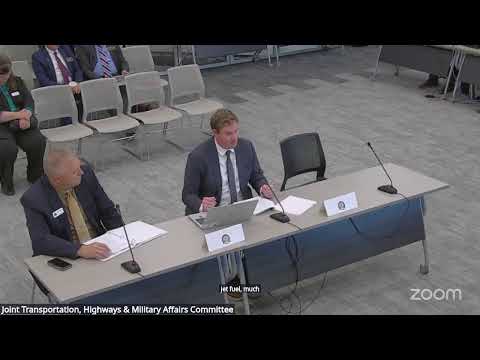
Proposal to lend SIPA funds for highways spurs Treasury warnings and a committee working group
Summary
Representative Steve Harshman proposed using up to $250 million from public-purpose SIPA loans to fund high-priority highway projects; the Treasurer's Office flagged potential multi‑million-dollar opportunity costs of drawing corpus funds and suggested bond issuance as an alternative. The committee voted to form a working group to study funding options.
Representative Steve Harshman introduced legislation and a budget amendment that would authorize public-purpose loans from the Strategic Investments Project Account (SIPA) of the Permanent Mineral Trust Fund to finance prioritized highway projects, including deadly Interstate corridors and an I-80 study group.
Harshman described the concept as borrowing from the state's higher-yield investment account and repaying the principal from SIPA receipts over several years. "The idea was to authorize a 5-year deal, a 250 million, and then a 5-year payback," he told the committee, adding that projects would be selected by the commission and that a subset of the bill would create a task force to study I-80 options.
Deputy State Treasurer Dawn Williams and Chief Operating Officer Norman LeBlanc warned the committee that large, early draws on the PMTF corpus carry opportunity costs. Using a conservative illustration, LeBlanc contrasted historic PMTF returns (about 9.1% over a five-year window) with a concessionary loan rate of 2.5% and calculated an illustrative "opportunity cost" in the tens of millions if the full $250 million were moved out of higher-return investments. "Over that time period, conservatively we're talking about a cost of 63.5 million dollars," he told members.
Treasury staff suggested alternatives, including issuing state bonds priced to a low yield. The office observed that a market-based bond structured to a target coupon or yield could deliver low-cost capital without removing assets from the PMTF investment portfolio, and outlined that bond issuance costs would be far smaller than the PMTF opportunity cost illustrated.
Committee members debated the constitutional and fiscal choices, with some senators expressing reservations about SIPA reliance and others urging the committee to study a range of options. By voice vote the committee approved formation of a working group to analyze HB82-style options and alternatives (bonds, dedicated trust funds, federal match strategies) and to report back to the committee by Sept. 30; the voice vote carried and no roll-call tally was recorded in the transcript.
The working group will examine legal, fiscal and operational trade-offs and return to the committee with concrete proposals following additional modeling and consultation with the Treasurer's Office and budget staff.