Get Full Government Meeting Transcripts, Videos, & Alerts Forever!
Get email alerts on the Transportation Infrastructure topic
No spam. Unsubscribe anytime.
TRIP report warns of rising construction costs and large unfunded highway needs in Wyoming
Summary
A TRIP state report presented to the Joint Transportation, Highways & Military Affairs Committee says 33% of state-maintained pavement and 7% of bridges are in poor condition, and WYDOT and TRIP officials placed unfunded needs in the hundreds of millions of dollars, urging earlier investment to avoid greater costs later.
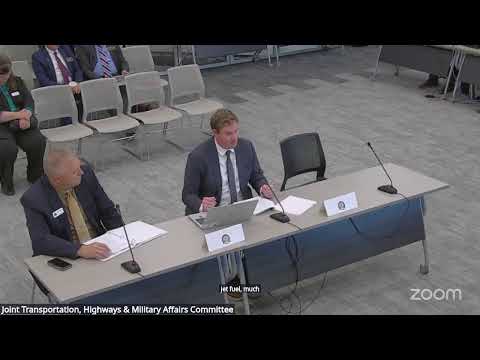
A nonprofit transportation research group told the Wyoming Joint Transportation, Highways & Military Affairs Committee on May 4 that rising construction costs and years of deferred maintenance have left the state facing large unmet highway needs.
Rocky Moretti, director of policy and research for TRIP, said his group's Wyoming report combines WYDOT survey data and federal sources to show a sharp erosion in buying power: "since the beginning of 2022, there's been a 52% increase" in construction input costs, he said. TRIP cited WYDOT findings that about "33% of state-maintained pavements are in poor condition" and that roughly "7% of the state's bridges are in poor condition." Moretti said WYDOT estimates an annual $125 million bridge funding shortfall and warned that deferred maintenance makes later repairs much more expensive.
WYDOT Director Darin Westby told the committee WYDOT currently budgets about $900 million a year overall, with nearly $400 million on construction, but said the department is operating with roughly 11—12% of positions vacant and must prioritize preserving the system. "We're sitting around 1850 (filled) positions," Westby said. He said WYDOT has been shifting design staff to produce "shelf-ready" projects so the state can move quickly if matching funds become available.
Committee members repeatedly pressed for detail on the scale of unfunded needs. WYDOT's Brian Olsen said recent drafts put statewide unfunded needs near a half‑billion dollars a year; he and Moretti clarified that the larger $500 million figure cited to the panel includes roadway, agency operations and other program needs, with roughly $370 million of that described as surface-transportation/road-centric needs in some WYDOT drafts. Moretti said TRIP's project priorities combine traffic, freight volumes, economic impact and safety metrics, and that the top projects listed include the I-80/I-25 Cheyenne interchange and widening US-287 near Laramie.
TRIP also emphasized safety and freight impacts: Moretti noted an average of 128 traffic fatalities a year in Wyoming over the past five years and estimated freight value moving by truck at $61 billion annually; the report projects truck freight tonnage to rise materially by 2050, increasing wear on roads. TRIP recommended cost-effective safety investments such as cable barriers, rumble strips and targeted turn lanes.
WYDOT and TRIP agreed to provide committee staff with underlying source tables for some headline numbers the panel asked about, including the job-impact estimate in the report and the department's spreadsheet of the 25 most-needed projects and their funding status. The committee did not take formal action on the report, but several members urged follow-up analysis on federal/state revenue assumptions before making policy changes.