Get Full Government Meeting Transcripts, Videos, & Alerts Forever!
Get email alerts on the House Bill 247 topic
No spam. Unsubscribe anytime.
Ohio signs House Bill 247 to rewrite dangerous-dog laws after Avery Russell's attack
Summary
Gov. Mike DeWine signed bipartisan House Bill 247, which State Rep. Kevin Miller said rewrites Ohio's dangerous- and vicious-dog statutes to allow immediate seizure after serious attacks, require $100,000 liability insurance for designated dogs, tighten fencing standards and preserve judicial hearings for disposition.
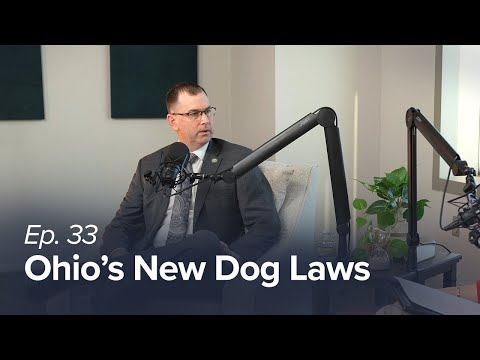
Gov. Mike DeWine has signed House Bill 247, a bipartisan measure that rewrites Ohio's dangerous- and vicious-dog statutes, State Representative Kevin Miller said on the Message from the House podcast. The bill, named for Avery Russell, was prompted by her disfiguring injuries in a dog attack and by input from dog wardens and victims.
Miller, a state representative, said the legislation gives authorities clearer authority to seize a dog immediately after a serious, unprovoked attack instead of having to wait until the animal was already designated "dangerous" or "vicious" under older law. "It was kind of a total rewrite of the dangerous and vicious dog laws," he said, describing the measure as an effort to make the statutes easier for wardens and prosecutors to interpret.
The bill adds specific requirements for dogs that are designated dangerous or vicious. Miller said HB 247 makes $100,000 of liability insurance mandatory for those animals: "you have got to carry $100,000 of of liability insurance on on that K9." The measure also tightens fencing language so yards must be enclosed with materials sufficient to restrain a dog, not merely a flimsy barrier; and it requires that when an invited guest is present a dog must be kept separately so it cannot access that person, Miller said.
Miller told the podcast that Ohio no longer designates dogs by breed and that HB 247 focuses on behavior: "now it's based totally upon the actions of the dog." He stressed that the bill preserves due process: seizures must be followed by a mandatory probable-cause hearing where a judge determines whether an animal's actions were unprovoked and decides on disposition, including euthanasia when warranted.
Miller said the bill moved from an initial hearing in May to final passage and signature with input from the Dog Wardens Association and the Humane Society, and that the changes are targeted at repeat offenders who fail to restrain dangerous animals rather than casual pet owners. He described constituent reaction as "extremely positive" and said the bill aims to prevent cases like Russell's across the state.
The host closed the episode by thanking Miller; Miller thanked listeners and discussed the legislative process that led to the law becoming effective. The transcript did not provide the exact vote tally but noted the legislation passed unanimously and was signed by the governor.