Get Full Government Meeting Transcripts, Videos, & Alerts Forever!
Get email alerts on the State Funding Endowment topic
No spam. Unsubscribe anytime.
State legislative official asks board to back proposed educational endowment to equalize funding
Summary
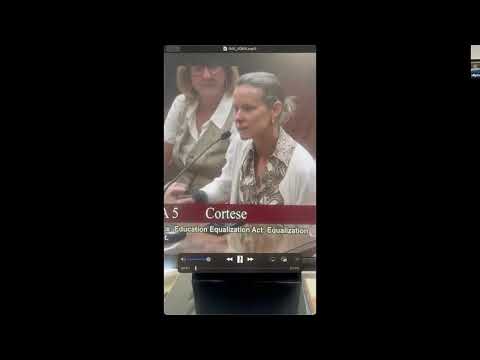
A visitor identified as Scott told the board he advocated in Sacramento for a measure by Senator Corteas, sponsored by the Silicon Valley Education Foundation, to create an educational endowment intended to provide steady, non-tax revenue to equalize funding between wealthier "basic aid" districts and ADA-funded districts.
Scott, introduced by the board, told Milpitas Unified trustees that he traveled to Sacramento to advocate for Senator Corteas’s bill, described in the presentation as being sponsored by the Silicon Valley Education Foundation and supported by a Santa Clara County School Boards Association committee. He said the measure is expected to be carried to the ballot as a constitutional amendment that would establish an educational endowment fund intended to provide steady income from principal rather than an annual tax increase.
Scott compared two districts of similar student population (he said one has about 10,200 students, the other about 10,100) and said the districts differ substantially in staffing and budget: he cited one district with roughly $375 million in budget compared with $175 million for the district he described, and described staffing ratios of about one staff member per seven students in the better-funded district versus one per 10 in his district. On class-size caps he said one district had a 22-student elementary cap while his district averaged about 25 in early grades and in some classes reached 32-to-1.
Using an anecdote to illustrate retention pressures, Scott said a former teacher named John left for another district for roughly $22,000 more pay despite wanting to stay. He argued that an endowment that produced steady revenue over time could help districts retain staff and reduce disparities.
Scott emphasized the proposal is not a tax, calling it “a unique way of taking opportunities when there's a state surplus rather than providing a one-time fund,” and described how a portion of surplus funds would be deposited into principal that generates ongoing distributions to districts. He said it would take time to build the fund but that it could materially benefit lower-funded districts if voters approve the change.
The board did not take a formal position on the proposal during the meeting; the presentation was offered as informational and advocacy context for the superintendent’s earlier remarks about Sacramento outreach.