Get Full Government Meeting Transcripts, Videos, & Alerts Forever!
Get email alerts on the Industrial Permitting topic
No spam. Unsubscribe anytime.
Board flags dust, water-use and traffic risks as cement plant seeks silo-height variance
Summary
An applicant seeking to site a cement/aggregate operation and variances for five storage silos drew sustained concern from the board about fine-particulate dust, potential silicosis risk, a reported 7,000 gallons/day water use figure, truck queuing on private Musket Court and whether the silo grouping would protrude above the ridgeline. Members asked for balloon tests, dust-mitigation plans and water-use verification.
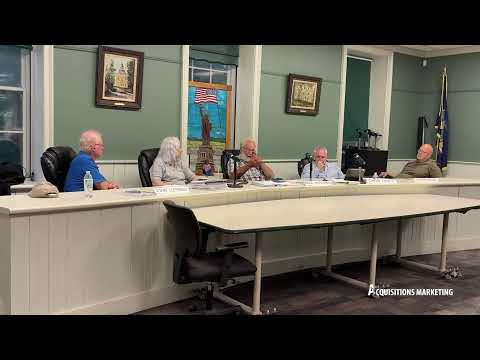
A proposed cement and aggregate operation brought the longest discussion of the meeting as board members probed environmental and operational impacts and how the project would be reviewed by zoning and planning.
Planning issued a negative declaration for the project, but the applicant is seeking a zoning variance for five storage silos that the applicant describes as non-agricultural storage and therefore exempt from the 45-foot height limit. The applicant requested roughly 75-foot silo heights; the board questioned whether such structures would protrude above the ridgeline visible from Route 17M and asked for a balloon test or clear visual rendering.
Environmental concerns dominated the review. Board members relayed neighbors’ and adjacent businesses’ worries that the plant’s fine particulate (described repeatedly in the meeting as a powder) could foul nearby industrial filtration systems, damage paint booths and food-grade fragrance operations, and pose respiratory health risks. One board member noted published concerns about silicosis in similar operations. The board requested details on dust-capture and mitigation measures, including whether dust collectors would vent above the ridge.
Water use and groundwater impacts were another central issue. The transcript records a figure of 7,000 gallons per day used for cooling aggregate or other plant processes; members urged a water-well test and asked that any significant groundwater withdrawal be studied. Truck queuing and circulation also concerned businesses that use Musket Court; members noted Musket Court is a privately owned road and warned that queued trucks could block access, and they pressed planning to require on-site queueing or other circulation assurances and to verify fire-access compliance.
Because planning’s public hearing for site plan review already closed, members discussed how affected neighbors might best raise concerns at an upcoming zoning-board (ZBA) hearing for the silo-height variance and whether new technical information could prompt reconsideration by planning. The board compiled a list of follow-up items — balloon test or renderings, dust-mitigation plan, water-use verification (well tests), truck-circulation and fire-access plans — before the project proceeds to final local approvals.