Get Full Government Meeting Transcripts, Videos, & Alerts Forever!
Get email alerts on the Criminal Finance topic
No spam. Unsubscribe anytime.
Committee advances anti‑money‑laundering bill after technical amendments
Summary
House Bill 43, expanding state money‑laundering rules to cover possession or transport of property known to be derived from criminal activity, was advanced with sponsor amendments to align definitions with federal law and to narrow the "reasonably should know" language that stakeholders said could sweep up clerks or small actors.
Representative Lean presented House Bill 43 to broaden Wyoming’s money‑laundering statute to reach those who transport or possess property they know or reasonably should have known was derived from criminal activity. The sponsor asked for and the committee adopted technical amendments to align statutory definitions with federal code and to remove the phrase "reasonably should know" from several provisions to avoid unintended criminal exposure for clerks and other low‑level actors.
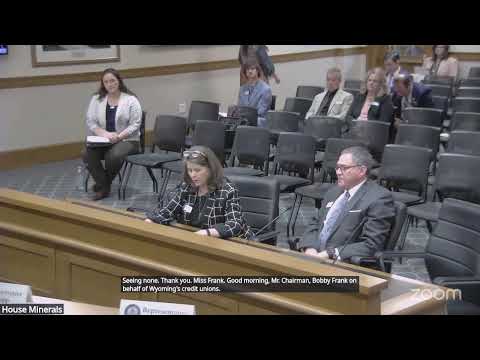
Law‑enforcement support and industry concerns: Alan Thompson, executive director of the Wyoming Association of Sheriffs and Chiefs of Police, said the statute would be a useful investigative tool. Financial industry witnesses including representatives of Wyoming credit unions and community banks generally supported an AML statute but urged removing or narrowing "reasonably should know" to avoid catching innocent clerks or small businesses; the sponsor’s amendment addressed that concern.
Key changes and rationale: Sponsor amendments added a cross‑reference to federal transaction definitions (31 U.S.C. 5312) and removed the "reasonably should know" standard at the committee’s request to reduce the risk that routine retail or bank clerks would face criminal liability for transactions they did not meaningfully scrutinize.
Vote and disposition: After testimony from law enforcement, banking law groups and regulated gaming interests, the committee adopted the sponsor’s amendments and recorded a roll call. The clerk announced the committee’s action as "do pass with amendments" and the recorded result as "8 to 1." The transcript shows roll‑call participants saying 'I' but does not identify a named 'no' vote in the printed record; the committee reported the bill to the next stage with amendments.
Next steps: The bill will proceed from committee with agreed clarifications to definitions and culpability standards; stakeholders signaled they will work with the sponsor on implementation details and primacy/coordination questions for state investigative authorities.