Get Full Government Meeting Transcripts, Videos, & Alerts Forever!
Get email alerts on the Election Audit topic
No spam. Unsubscribe anytime.
Committee advances one‑time 2026 hand‑count audit after clerks and Secretary of State testify; amendment requires report regardless of discrepancies
Summary
Senate File 113 would require county clerks to hand‑count about 5% of ballots in 2026 for selected federal, statewide and legislative races to validate machine tabulation. Clerks said they can administer a one‑time audit in 2026; the Secretary of State urged folding audits into a long‑term statutory reform and flagged timing for certification. The committee amended the bill to require reporting regardless of results and advanced it by roll call (4–1).
Senator Craig introduced Senate File 113 as a one‑time 2026 hand‑count comparison to verify electronic tabulation in the upcoming primary and general elections. Under the bill as presented the Secretary of State would select one federal and one statewide race for each county, counties would select one legislative race, and clerks would hand‑count as close to 5% of ballots cast on election day as possible and compare that total to machine tabulation.
Why it matters: The proposal is aimed at restoring or improving public confidence in election results by producing a bipartisan, county‑level comparison of machine counts and a contemporaneous hand count. It responds to public concern about tabulation integrity and seeks to produce machine‑level verification in a way clerks can administer in a compressed calendar.
Secretary of State Chuck Gray and county clerks supported the concept in principle but urged placement of any long‑term audit framework into a broader elections bill (House Bill 52). Gray cautioned that because the SF113 audit is scheduled after the county canvass and certification, anomalies could be identified after results are certified; that timing reduces the practical remedies available and is "a band‑aid" for 2026, he said. Clerks’ representatives — Mary Langford (association president) and Malcolm Irvin (Platte County Clerk) — told the committee the bill as drafted is administrable for 2026 if the committee keeps the non‑codified, one‑time structure and asked that clerks report results to the committee whether or not discrepancies are found.
Public commenters offered technical advice. Gail Simmons of Civics 307 urged random selection plus targeted sampling to ensure both large and small units are represented, standardized discrepancy categories, and a requirement to perform a second hand count if any tally differs. The League of Women Voters’ Margaret Herman warned that hand counts are time‑ and labor‑intensive and recommended considering off‑cycle verification of past elections to avoid adding complexity during election weeks; she also urged a fiscal note for local costs. County clerks and other witnesses noted that current post‑election checks exist in statute and in practice but that a visible hand‑count audit could calm a portion of the public debate.
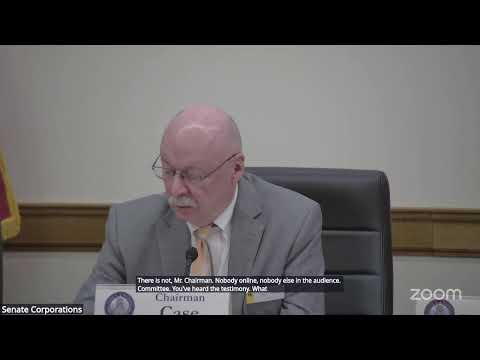
Committee action: Senator Steinmets offered and the committee adopted an amendment to require clerks to report the audit results to the corporations committee regardless of whether discrepancies are found. On a roll call the committee approved SF113 as amended, 4–1; Chairman Casease recorded the sole 'no' vote. Senator Craig was designated the floor sponsor.
What’s next: SF113 moves to the Senate floor with a committee amendment requiring reporting; the Secretary of State and clerks said they will work with the committee to refine operational details and timeline for 2026 administration.
Sources: Senator Craig’s sponsor remarks; testimony from Secretary of State Chuck Gray and staff; county clerks Mary Langford and Malcolm Irvin; public testimony from Gail Simmons (Civics 307) and Margaret Herman (League of Women Voters).