Get Full Government Meeting Transcripts, Videos, & Alerts Forever!
Get email alerts on the Energy Industry Incentives topic
No spam. Unsubscribe anytime.
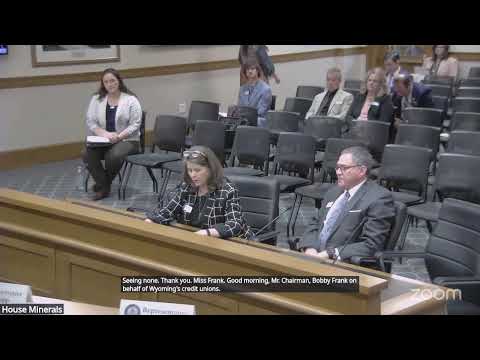
Committee advances bill to create industrial 'sovereign' zones to convert Wyoming gas, with amendments
Summary
The House Minerals Committee unanimously moved House Bill 120, as amended, to create industrial 'sovereign' zones to encourage in‑state conversion of natural gas (and, by amendment, coal) into higher‑value products such as hydrogen, ammonia and carbon black; DEQ raised permitting and primacy concerns and recommended timing amendments.
Representative Kevin Campbell introduced House Bill 120, the Energy Production Reclassification and Sovereignty Act, to let the Wyoming Energy Authority work with counties to establish industrial "sovereign" zones and to offer expedited permitting and narrow tax incentives aimed at encouraging in‑state manufacture of hydrogen, ammonia and carbon black from raw feedstocks.
The bill’s sponsor, Representative Kevin Campbell, said the measure would "authorize the Wyoming Energy Authority the ability to work with our counties to create a special zone, an industrial zone inside an industrial zone" and argued the move would add value to Wyoming feedstocks. "We're taking one raw product and we are manufacturing three high value, high demand premium products," Campbell said, naming hydrogen, ammonia and carbon black.
Why it matters: Campbell and supporters said the measure is intended to capture higher global prices for processed fuels and chemical inputs by converting low‑value feedstocks in‑state and overcoming what he described as Pacific‑coast market resistance to raw natural gas. The bill would allow a 2% reduction in severance tax for manufacturing inside a designated zone and creates a fast‑track permitting incentive described in the draft as a 45‑day prioritization window for large projects.
Concerns from regulators and technical input: Todd Parfett, director of the Department of Environmental Quality, told the committee the department holds primacy for air and water permitting and urged changing the strict "45‑day" target. Parfett said average permit timelines are longer — citing roughly 120 days for air permits and about 88 days for surface water permits — and recommended language that prioritizes and expedites these applications without jeopardizing federal primacy or public notice requirements. "Taking it to 45 days would be troublesome," Parfett said, and suggested prioritization and verification approaches tied to an already‑permitted zone could deliver much of the intended speed benefit.
Industry comment and suggested changes: Energy‑sector witnesses and trade groups generally supported the bill’s aim. Rob Quaker, Executive Director of the Wyoming Energy Authority, said counties should lead in identifying potential zones. Kristen Lee of Glenrock Energy requested explicit inclusion of coal as an eligible feedstock, describing a coal‑to‑blue‑ammonia feasibility concept that would use gasification; the sponsor and several committee members later adopted an amendment adding coal and related statutory references.
Technical and market cautions: Matt Murdoch (Raven SR) urged the committee to keep certification voluntary, measurable and aligned with internationally accepted life‑cycle carbon intensity methodologies, warning that a Wyoming‑only "gold standard" could create market confusion if it deviates from buyer requirements. The sponsor retained the voluntary certification language but accepted DEQ’s recommended changes that clarify permitting priorities.
Votes and next steps: After adopting DEQ‑sponsored language to protect primacy and a separate amendment to add coal and broaden feedstock/technology language, the committee voted to report the bill as "do pass with amendments." The clerk announced a committee result reported in the record as "due pass with amendments" (the audio/text shows the clerk’s announcement as "8 to 1" while the printed roll call records committee members saying 'I'; the transcript does not explicitly name a 'no' voter). The bill will move forward with the adopted amendments.
Implementation details and fiscal notes: Witnesses identified several implementation items the committee will need to track: an estimated roughly $43,000 one‑time vendor cost to update the mineral tax system, potential changes to sales and use tax statutory cross‑references if additional manufacturing exemptions are created, and the need to align severance statutes if coal is included. DEQ and the Department of Revenue recommended statutory language and timing adjustments to avoid undermining federal primacy and to allow necessary agency systems changes.
The committee left the bill in a posture to advance with amendments and directed staff and stakeholders to refine statutory citations and permitting language before floor action.