Get Full Government Meeting Transcripts, Videos, & Alerts Forever!
Get email alerts on the House Bill 141 topic
No spam. Unsubscribe anytime.
Wyoming Senate rejects recall of House Bill 141 amid debate over a 'cloud of suspicion'
Summary
The Wyoming Senate voted down a motion to recall House Bill 141 (the 'Fifth Amendment Protection Act') from committee, 7–24, after extended floor debate about whether a criminal investigation that touched a county tainted the bill and risked undermining institutional integrity.
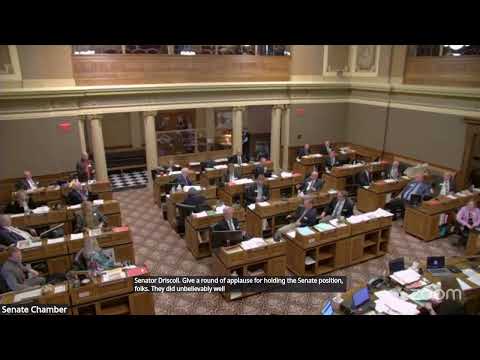
The Wyoming Senate on March 2 rejected a motion to recall House Bill 141, the so-called "Fifth Amendment Protection Act," from the Appropriations Committee and commit it to the Committee of the Whole, after strained debate about whether the measure is "tainted by a cloud of suspicion." The roll-call vote on the recall motion was 7 ayes, 24 noes, and the motion failed to meet the two-thirds threshold required under Senate rules.
Senator Biteman, who supported the policy but urged caution, told colleagues the bill's merits are clear but that "to a significant portion of the public, [the bill] is tainted by a cloud of suspicion" tied to an ongoing investigation in one county. He said the institution and public trust should take priority and that the matter could be handled by the next legislature.
Other supporters of delaying the recall emphasized public perception. "When the integrity of the institution is at question, we should unite as a Senate," Senator Rothfuss said, arguing the chamber must protect public confidence even if the policy itself is sound. Several senators likewise said they supported the bill's policy goals but not advancing it at this time.
Opponents of delaying the recall argued that accusations and investigations should not be used to intimidate lawmakers or block debate. Senator Steinmetz invoked constitutional protections for legislative debate and said the Senate must resist pressure: "I will not cave to threats, whether whispered or shouted," he said, describing the speech-and-debate shield in Article 3, Section 16 as essential to representative government.
The motion to recall required three senators to second; Senators Larson, Steinmetz and Pierson were announced as the seconders. After the floor exchanges and a point of order about decorum, the Chief Clerk conducted the roll-call. The motion failed with seven aye votes and twenty-four no votes.
After the vote, the Senate proceeded through its remaining business, including the signing of enrolled acts and confirmation of appointments. The debate on HB141 underscored a wider split in the chamber between members prioritizing protection of private property rights and those emphasizing the need to avoid the appearance of impropriety while an external investigation continues.