Get Full Government Meeting Transcripts, Videos, & Alerts Forever!
Get email alerts on the Reproductive Health topic
No spam. Unsubscribe anytime.
Wyoming Senate committee advances "Human Heartbeat Act" after heated debate over findings and legal scope
Summary
The Senate's committee of the whole recommended that House Bill 126, the "Human Heartbeat Act," do pass after hours of debate over legislative findings, medical assertions and a procedural trigger tied to prior viability law; division votes rejected some inserted findings but approved fallback language. Supporters said the bill protects unborn life; opponents warned of constitutional vulnerability and urged a constitutional amendment instead.
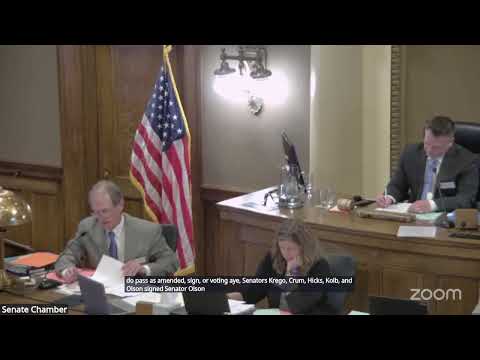
The Senate committee of the whole on March 2 recommended passage of House Bill 126, titled the "Human Heartbeat Act," after prolonged debate over its factual findings and legal scope.
Senator Hutchkins, the bill sponsor in committee, framed the measure as a public-health and safety act that would prohibit abortion procedures after detection of a fetal heartbeat while including exceptions for medical emergencies. She said the bill "provides legislative findings specifying requirements associated with the termination of pregnancies" and that the measure aims to "protect the health and general welfare of the people." She also said that, under the bill, a medical emergency that threatens death or substantial impairment would allow termination that preserves the chance the unborn child might survive.
Supporters argued the bill responds to recent judicial developments and restores state authority to regulate abortions. Senator Steinments, explaining an inserted committee amendment, said the measure also includes a trigger that would bring back earlier viability-based law if courts hold parts of the new statute unconstitutional. "This amendment ... is a trigger to go back to our 2022 viability laws so that we have a floor ... if this is struck down," Steinments said.
Opponents pressed two main lines of objection. Several senators, including Senator Rothus and others, criticized the proposed legislative findings as statements of belief rather than established medical fact and warned the added language would deepen constitutional and evidentiary challenges in court. "Findings are just like an insertion of 'this is our opinion,'" one senator said during debate, urging rejection of some of the inserted language.
The committee divided the standing committee amendment into two parts. Division one — which would have inserted expanded findings asserting a detectable fetal heartbeat is a key indicator that an unborn child is alive and likely to reach live birth — was rejected on a roll call. Division two, which contained trigger and conforming language to revive prior statutory standards if courts invalidate the new provisions, passed after a rules challenge and a standing vote.
Senators debating the bill cited recent state and federal case law, including the state Supreme Court's treatment of Article 1, Section 38 of the Wyoming Constitution, and the 2022 national rulings that shifted abortion regulation to the states. Opponents urged a different path: taking a constitutional amendment to voters rather than legislating at length on a contested standard in statute.
After extended remarks on the merits and the policy trade-offs, the committee voted to report House Bill 126 with a favorable recommendation. The committee record shows both procedural division votes and extensive debate on the evidentiary and constitutional risks tied to the bill's language. The measure will proceed in the legislative process subject to additional floor consideration and any legal challenges that may follow.