Get Full Government Meeting Transcripts, Videos, & Alerts Forever!
Get email alerts on the Zoning And Planning topic
No spam. Unsubscribe anytime.
Swatara advances wide-ranging SALDO and zoning amendments to tighten rules for data centers
Summary
The Swatara Township Board voted June 10 to forward a 36‑page update to the subdivision and zoning ordinances — including new data‑center definitions, minimum tract sizes, larger setbacks, 70‑foot buffer yards and mandatory traffic, noise and water studies — to the township and county planning commissions for 30‑day review.
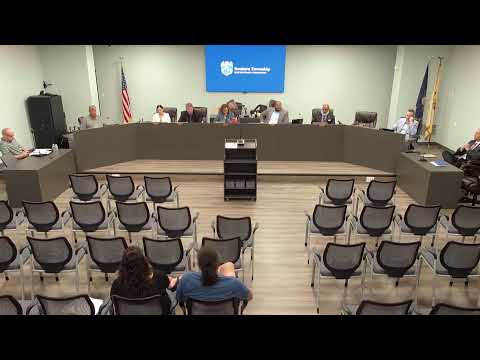
Swatara Township moved June 10 to send a comprehensive package of subdivision and zoning ordinance updates to the township and Dauphin County planning commissions, a step staff and commissioners said is intended to strengthen local controls and close zoning loopholes that residents tied to recent development concerns.
The 36‑page draft — assembled largely from a Tri‑County regional model ordinance — consolidates many scattered regulations into a single, readable section and adds new use definitions and use‑specific criteria for large industrial uses, including data centers. "We put everything into this table so it's easy to read for the public," said Zach Rice, who led the presentation.
Why it matters: the draft establishes clearer tests and new pre‑submittal requirements for large projects. Key provisions read to the board include a 50‑acre minimum continuous tract for data‑center projects, maximum impervious coverage of 75%, a cap on building coverage at 50% of the lot, and a 210‑foot setback for the data‑center building from the nearest adjoining property. The draft also requires traffic impact studies, water‑supply verification and pre‑ and post‑construction noise studies paid for by the applicant.
Commissioners and residents pressed staff on specific protections. Vice President Steel asked to match setbacks for ancillary infrastructure — including substations and maintenance buildings — to the main 210‑foot building setback, saying, "I would not want a substation 70 feet away from my house." Staff signaled willingness to include those edits before the document is finalized.
The ordinance adds a 70‑foot deep landscape buffer where a proposed data center adjoins residential property or other sensitive receptors and sets minimum planting sizes and densities, plus requirements for long‑term maintenance. Noise and vibration rules require applicant‑paid baseline and post‑construction studies and give the township the right to require additional mitigation if monitoring shows noncompliance.
Staff told the board it intentionally included certain requirements even when data centers might not meet other numerical thresholds (for example, requiring a traffic study for data centers regardless of trip generation), and reiterated that some technical approvals — such as sewage‑system permits or river‑basin approvals — remain the purview of state or regional authorities. Commissioner Connelly said the township should post links to the Susquehanna River Basin Commission rules and other relevant agency materials on its website so residents know which agencies regulate water and wastewater.
Process and next steps: the board voted to forward the draft — with the chair's list of edits — to the township planning commission and the county for their 30‑day review. The township planning commission is scheduled to review the document July 14; the public will be notified before any public hearing and eventual board vote.
What was said: resident Sarah Pinter asked that any amendments related to data centers be read aloud at meetings if they were not available online so the public could meaningfully comment. "That would be greatly appreciated," she told the board.
What comes next: staff will post the draft ordinance on the township website (with any board edits) and accept written comments before the July planning commission meeting; commissioners asked legal staff to review board edits prior to the posting to ensure the text sent for review reflected the board’s direction.