Get Full Government Meeting Transcripts, Videos, & Alerts Forever!
Get email alerts on the Senior Housing topic
No spam. Unsubscribe anytime.
Peters Township planning commission tables Smith Packet assisted-living plan amid questions over road, traffic and geotech
Summary
The Peters Township Planning Commission unanimously voted to table the Smith Packet Assisted Living and Memory Care preliminary land-development plan after hearing outstanding engineering issues, questions over whether a new road will be public or private, and extensive neighborhood concerns about traffic, drainage and soils.
The Peters Township Planning Commission on June 11 unanimously agreed to table the preliminary land-development plan for the Smith Packet Assisted Living and Memory Care facility to allow the applicant and staff time to resolve outstanding engineering and procedural issues.
Mark (planning staff) presented the proposal as an 8.43-acre site on East McMurray Road for a three-story, 101,000-square-foot assisted-living and memory-care building designed for about 136 residents. He told the commission the plan meets most dimensional standards but exceeds the ordinance’s maximum front-yard setback and proposes 75 parking spaces where the ordinance sets a 65-space maximum; the project also triggers a $57,750 traffic-impact fee and has outstanding geotechnical and stormwater comments.
Why it matters: the commission said it needed more detail on several items that materially affect neighbors and long-term municipal obligations — chiefly whether the new internal road will be dedicated to the township or remain private, how grading and stormwater will be handled on steep slopes, and whether a geotechnical report sufficiently supports a three-story structure.
The applicant’s representative, Win Bishop, senior vice president of development and construction for Smith Packet, said the zoning hearing board’s approval anticipated a private road built to public standards that the developer could later offer for dedication. "We don't really care whether it's public or private," Bishop said, "we're building the road to public standards." Staff and the applicant agreed the road would be built to a standard that would allow dedication later but that some design elements (parking and setbacks adjacent to a public right-of-way) would change how the site is arranged.
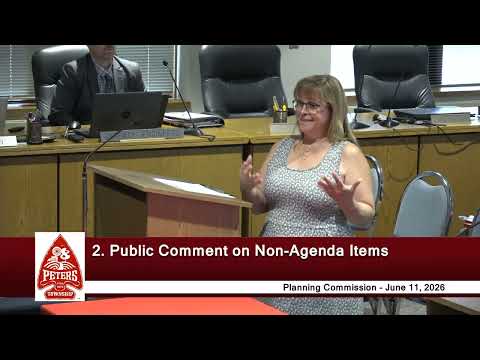
Neighbors pressed a series of practical concerns during public comment. Jim McGlin, who lives on Pleasant Avenue, warned of construction traffic and emergency access problems, saying, "There's going to be bulldozers in your backyard next week" if those issues are not addressed. Other neighbors highlighted potential slope instability, uncontrolled runoff, lack of a construction-phase traffic plan, possible lighting and noise impacts, and loss of green space; several requested the commission require the developer to provide additional buffers and to submit a geotechnical report and a traffic study scope that includes construction-phase impacts.
Commission action and next steps: the applicant requested tabling to address staff and consultant comments. The commission then moved, seconded and voted unanimously to table the application. Staff noted the 90-day review clock begins at the hearing date but said the applicant may request time extensions; staff also said resubmittal timing will determine whether the item returns to the July agenda or a later meeting.
The commission recorded no final approvals or permits at the June 11 meeting; next procedural steps are for the applicant to provide the outstanding geotechnical, stormwater and traffic study materials and for staff and consultants to review them prior to a future resubmittal.