Get Full Government Meeting Transcripts, Videos, & Alerts Forever!
Get email alerts on the K 12 Technology Policy topic
No spam. Unsubscribe anytime.
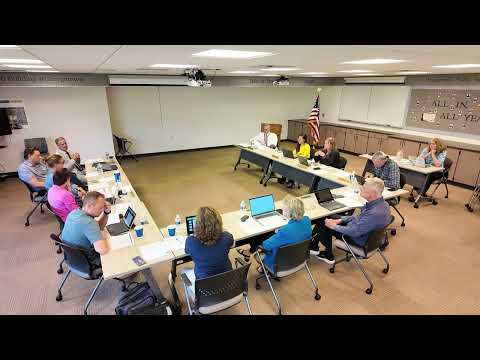
Hudsonville board weighs stricter phone rules and districtwide tech pilot
Summary
Board members debated tightening student phone rules during instructional time and whether to scale a technology pilot that locks or limits phones (two vendor options discussed); concerns included staffing, privacy, 504 accommodations and rollout timing.
Hudsonville Public School District trustees spent the bulk of their meeting discussing possible changes to the district's student cell-phone policy and whether to pursue a districtwide technology pilot to enforce limits.
The discussion, led by a staff member who summarized recent pilots, focused on two vendor approaches: an app referred to in the meeting as The Commons, which uses geofencing and had a small pilot of about 20 students, and a second product discussed as Doorman (also cited as Dorman/Door man in the presentation) that syncs with PowerSchool and can record attendance via a tap-in feature. The staff member said the pilot taught administrators about technical quirks (for example, time-zone settings affecting geofence timing) and that the district is currently compliant with state law but is considering how far to go beyond the legal minimum.
A teacher who spoke in favor of a technology approach said locking phones removes temptation in class and makes enforcement simpler. "Removing that temptation by the technology piece seems to be a really powerful tool," the teacher said. Board members raised practical concerns about scaling: one example cited from another district had two administrators managing about 750 students during rollout, and the Hudsonville presentation estimated roughly 2,000 students districtwide if the district expanded the pilot.
Trustees discussed enforcement models ranging from keeping "phone hotels" (locked boxes or caddies in classrooms) to a stricter bell-to-bell ban that would remove phones from students entirely. Several board members noted that a full ban would be easier to enforce if uniformly applied but would create new logistical burdens and risks, including increased front-office calls, the need to manage 504 or medical exemptions, and possible increases in disciplinary actions.
Staff described safety and privacy safeguards the vendors claim to provide, including an emergency-unlock feature that generates a dashboard notification for administrators. The board asked staff to verify vendor compliance with app-store and state privacy requirements before any procurement. Trustees also discussed a timeline for policy work: review by the policy committee in June, board action in July if changes are recommended, and parent notification in August, with the possibility of a phased rollout (for example, a half-year or January start) if the board approves moving forward.
Several members urged caution about being among the nation's early adopters and recommended that the district let the technology mature while continuing policy refinement. Others favored piloting a more robust solution now to reduce classroom enforcement burdens. The staff member said the district will continue analysis, gather more details on vendor privacy and staffing needs, and return to the policy committee with options.
The board did not take a vote on any phone-related policy at the meeting; members asked staff for follow-up information and signaled that policy revisions could appear on the July agenda if the policy committee recommends changes.