Get Full Government Meeting Transcripts, Videos, & Alerts Forever!
Get email alerts on the Mapping Tools topic
No spam. Unsubscribe anytime.
Webinar demonstrates New Jersey Community Asset Map and Google My Maps for local organizers
Summary
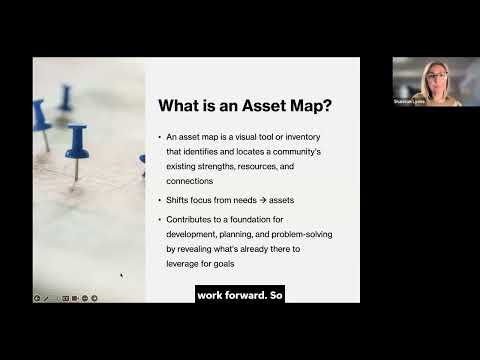
Presenter Shannon Lyons demonstrated the New Jersey Community Asset Map and Google My Maps, showing how layers and simple pins can visualize walkability, transit access and local services; the webinar stressed verifying local accuracy and maintaining datasets.
During the webinar, Shannon Lyons walked attendees through online mapping tools that practitioners can use to assemble and share asset maps. Lyons showed the New Jersey Community Asset Map to illustrate statewide layers — walkability, median household income and job density — and explained that users can filter results to the municipal or county level for planning or grant support.
"If you go to NJ Community Asset Map... you can filter all the different kinds of assets," Lyons said, demonstrating how to view walkability pockets and drill down to New Brunswick and other municipalities.
Lyons also recommended Google My Maps as an accessible option for custom maps. She demonstrated creating layers, dropping pins for transit stops, grocery stores and community centers, and color-coding categories. "Google My Maps is a great tool," Lyons said, and she encouraged attendees to create a Google account tied to a project so maps and data persist and can be shared with a team.
Both presenters cautioned that online sources vary in currency and completeness; Lyons noted that Google updates some datasets more frequently in urban areas than in rural places and recommended cross-checking with local knowledge. Rebecca Martin suggested an accessible advocacy step: registering local businesses on Google and adding wheelchair accessibility information to their profiles to improve accessibility data for residents.
Slides and links to the tools Lyons demonstrated were promised for follow-up distribution to attendees.